Uncategorized

Birth centenary of M. Ilanchezhiyan, social activist, writer and an excellent academic!

Some time ago, one of my colleague informed me of a space-time graph in which one can place individuals depending on the influence they had. All humans have the common origin and each one is represented by a point depending on how far their name and fame extended in space and time. Most human beings lie very close to the origin with their influence only extending to their family in their lifetime. Leaders who transformed societies for the better or worse would appear diagonally far away from the origin, as their influence goes beyond their birth place and date. This graph has only positive axes. The distance between the person and those who learn about the person is given in x axis and the time difference between the two is given in y axis. As one can see, no one who lived before the person’s time could know about the person. Some names that come to my mind are Thiruvalluvar, Auvayyar, Buddha, Asoka, Jesus, Raja Raja Chola, Cleopatra, Da Vinci, Napolean, Lincoln, Marx, Hitler and Gandhi. These people are known to many living all over the world for centuries after their birth. It is likely that there are several others in the human history who made contributions which influenced beyond their time and space but remain anonymous. During the time of Goutam Buddha and Mahavir, Makkhali Gosala founded Ajivika (aseevakam in Tamil) and he remains unknown to most now (1). From what I read, Makhali Gosala had thoughts that resonate with me today. Both he and his religion have disappeared now and maybe humanity had been influenced by his thought without knowing. Considering my experience over the last 60 years, I can think of a few whose contributions last but their names fade away. Several of the very influential people that I had known when I was young, are virtually unknown to the youth of today. A. R. Venkatachalapathy, Sahitya Academy winner for Tamil books in 2024, wrote the biography of V. O. Chidambaram Pillai (2), who is popularly called as ‘Kappalottiya Thamizhan’ (Tamil who owned a ship). To my surprise, I found out that most of the youth of today have not heard of him.

Today, 21 October 2025 happens to be the birth centenary of Prof. M. Ilanchezhian who lived in Chennai and Kanchipuram and contributed a lot in his lifetime. I suspect, very few living today know of him. I must reveal that I got to know him as he happens to be my wife’s uncle (elder brother of her father).
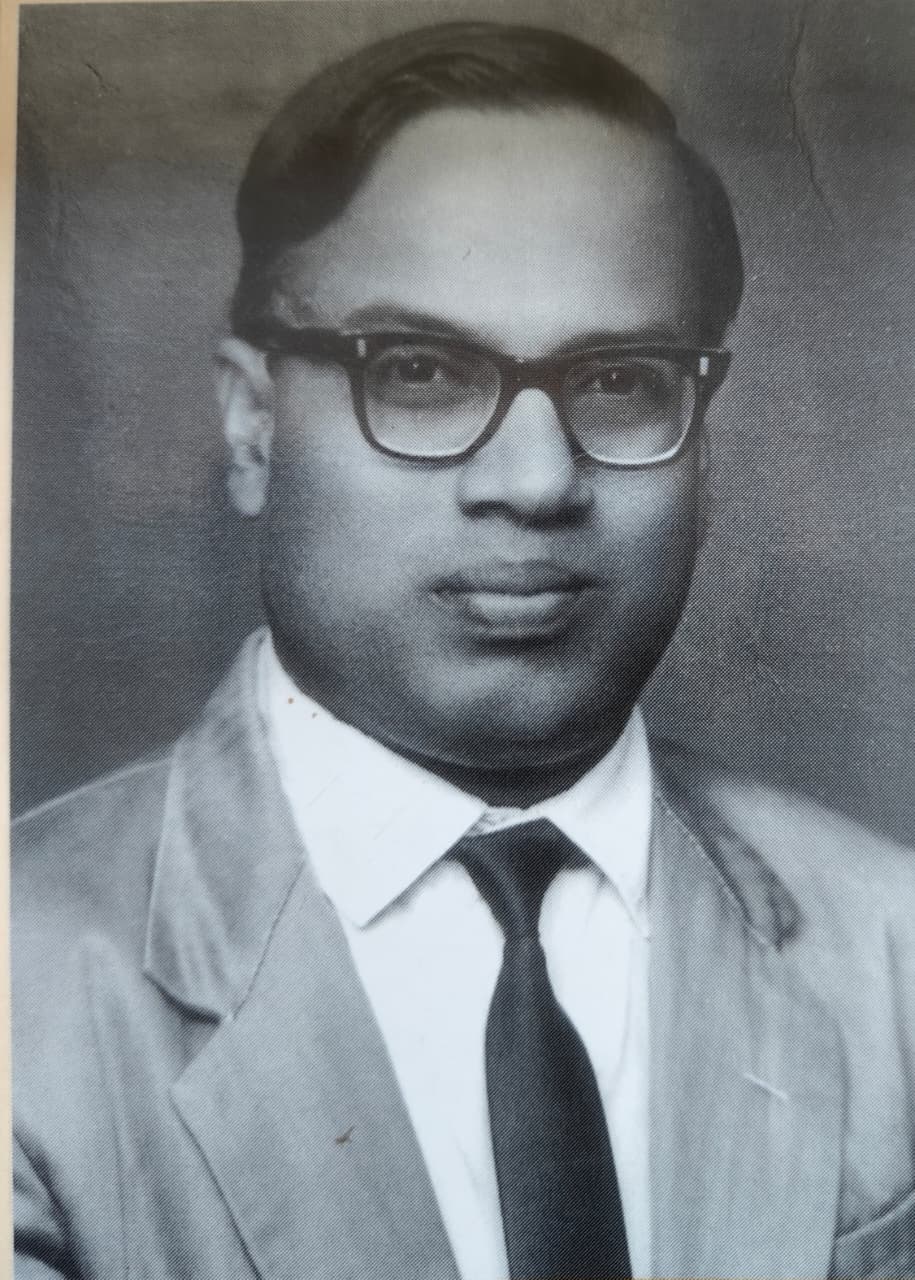
There is a Wikipedia page on Prof. M. Ilanchezhian now (3). He was born as the first child of Manikkavasagam and Abirami Ammal in Perunagar near Kanchipuram on 21 October 1925. Father Manikkavasgam was very concerned about the disparity in society we had during his time. Besides, the status of Tamil language in the then Madras state was rather poor. India has a group of people who managed to remain powerful and Tamil was mentioned as ‘narabasha’ (language for the people) and Sanskrit was mentioned as Devabasha. Besides, all classical music festivals would have songs in Telugu and Tamil was forbidden. Tamil is among the oldest language that is still widely spoken and has a rich literature starting from more than two millennia ago. In the middle of last century, Dhandapani Desikar sang in Tamil in Madras (Chennai now) and this upset the organizers. They decided to wash the stage with cow urine claiming the stage has been polluted (4). The popular magazine Kalki wrote an editorial justifying the action. This was strongly condemned by many in the state. After sensing the mood in the state, editor and popular novelist Kalki changed his stand. He had himself written beautiful songs in Tamil (kaatrinilae varum geetham comes to mind). This was sung by M. S. Subbulakshmi and the song was very popular (5). His novel Ponniyin Selvan was very popular as well and made into to a successful movie recently by Maniratnam. Nadars were not allowed to enter the Meenakshi Temple in Madurai and Mookka Nadar was lynched for defying the ban. I have written another blog on this (6). Times have indeed changed now. Recently, I visited Thiruchendur and found out that Shiv Nadar had donated for renovation of the Temple. I understand he donated funds for building the Kalaingar Karunanidhi Library in my hometome Madurai as well. However, during the first half of 20th century, the situation demanded a social reform movement. For most of the people birth determined what one could hope to do in life. Justice party was founded with the main objective of social justice. This led to the Dravidar Kazhagam (DK) and Periyar was invited to lead the organization. Manikka Vasagam was very active in Justice Party and then DK. He had changed his name to Manimozhiyar and was popularly known as Kanchi Manimozhiyar (7). He pushed Annadurai to start a political party and DMK was born. He was an MLA from Saidapet and stepped down to make Karunanidhi an MLA from Saidapet. Though he did not contest, he actively campaigned in the consituency. His son Kumarasamy was with him through all these and changed his name to Ilanchezhian.

Ilanchezhian attended Muthaialupettai High School and completed his SSLC (Secondary School Leaving Certificate), which was after completing 11 years of School. Tamil Nadu had 11+1 school and pre-university before starting college those days. This became 10+2 just after I completed my SSLC. He got BA(Hons) in Economics from Pachaiappa’s College, Madras. He joined Pachaiappa’s College in 1952 as a faculty in Economics. He became a Professor and Head of the Department and moved as Principal at Pachaiappa’s College in Kanchipuram. He also served as Principal at Kandasamy Naidu college before retiring in 1984. However, before he started his academic career, he was actively involved in Justice Party, DK and DMK. He worked as co-editor for the newspaper titled ‘Porwaal’ (War sword) with Manimozhiyar as the Editor. He wrote Editorials which were powerful. His Editorials were published as a book in 2009 (8). He authored a book titled ‘Thamizhan thodutha por’ (War waged by Tamils) telling the story of the anti-Hindi protest that controlled the state politics (9). The cover of the book is shown in the image below. The father-son duo were very active in the social reform movement of the Madras state. It is thanks to the work of many like them that all around development is seen today in Tamil Nadu.

I read a news recently about the Madhya Pradesh Government telling the Supreme Court in India that Caste was founded on Social Harmony (10). When I read a statement like this proposed by a Government or those holding power, I cannot but think how hollow they sound. Ambedkar did not believe Hinduism will solve the problems originating from the caste hierarchy and converted to Buddhism before he passed away. He wrote a book titled ‘Annihilation of Caste’ (11). I would be happy to read from the sections that were at the lower end of caste hierarchy declaring that ‘caste is a western conspiracy and we enjoyed the social harmony’. If these statements come from those who are on top, I see only a conflict of interest. They are justifying a system that allowed them to rule and prosper.

One of the decisions Justice party made was to introduce reservations. Today, it is difficult to miss memes that claim reserved category students got admission after securing zero marks in some parts of India. In 2012, I found out that the minimum marks required form admission to MBBS in Tamil Nadu was very similar across all categories. This was possible as the reservation helped all sections to grow. I wrote an Editorial in Current Science giving the data (12). I had written a blog on reservation in India and affirmative action in the USA earlier (13). I was just reading the autobiography of Katalin Kariko (14), winner of Nobel prize in physiology in 2023. Her father was a butcher and she grew up in postwar Hungary, a communist nation under the umbrelage of USSR. She mentions about school students names ending with F, indicating that their parents are physical labourers. Hungary thought children of labourarers should be educated and created opportunities to do it. Birth should not decide the future f any kid. Most everyone who has completed high school would have learned about the van der Waals equation (15). van der Waals was from a carpenter’s family and Netherlands decided to give education to all when he was young. He started school late and got his Ph. D. when he was 36. It had the equation named after him. Curt Witting was born in a place that was captured by different countries of Europe in his earlier years. His mother took him in a boat to Chicago where he grew up in a bad neighbourhood. Illinois decided to educate all children irrespective of their background. He became a successful experimental physical chemist having a great career at the University of Southern California (16).

Our caste and patriarchy all over the world may have given social harmony, when no one questions hierarchy. As they say, if you love someone, set them free. If they come back they are yours. If not, they were never yours. Using societal controls and planting a narrative of social harmony may bring stability. Not growth. To me this could certainly be one of the reasons for India not growing in the last millennia after having a great past. People like Ilanchezhiyan and Manimozhiyar fought for social justice and to a large extent they achieved it. It is a pity that many who benefitted from their thoughts and actions do not know them. Much worse, some of them are led to believe that they have been cheated by this movement and we should return to the glorious past. I do not know where Prof. Ilanchezhian would appear in the graph, near the origin or away in the diagonal. I am certain that his contributions have helped humanity. On his birth centenary, I remember him with gratitude.

References:

  1. https://www.britannica.com/topic/Ajivika I found this to be a good cite to learn some history. Accessed on 21 October 2025.
  2. A. R. Venkatachalapathy, Swadeshi Steam, Penguin Books (2023)
  3. https://en.wikipedia.org/wiki/M._Ilanchezhian Accessed on 21 October 2025.
  4. I found a historical article on this by a Japanese author and will add this here. Most today are not aware of this and they do not understand the reasons for the protest. This incident was also discussed in ‘Aettikku potti’ a feature in Kalki magazine.
  5. I love this song: https://www.youtube.com/watch?v=ikqFFjO_2cg
  6. https://earunan.org/2015/02/01/rosa-parks-and-mooka-nadar-recent-tales-from-the-worlds-oldest-and-largest-democracies/
  7. https://en.wikipedia.org/wiki/Kanchi_Manimozhiar accessed on 22 October 2025
  8. Thalayanga Ilakkiyam (Literary Editorials) Vasantha Publications, 2009 (Contains 30 of the impactful editorials published in Porwaal).
  9. Archive can be found here: https://archive.org/details/230225-193143/page/n25/mode/2up The book is still available.
  10. https://indianexpress.com/article/india/madhya-pradesh-govt-caste-system-founded-on-principles-of-social-harmony-10309526/ accessed on 21 October 2025.
  11. https://ccnmtl.columbia.edu/projects/mmt/ambedkar/web/readings/aoc_print_2004.pdf accessed on 21 October 2025.
  12. Editorial available online 0555.pdf accessed on 21 October 2025.
  13. https://earunan.org/2015/05/27/reservation-vs-merit-in-india-or-affirmative-action-vs-equal-opportunity-in-the-usa/
  14. https://www.penguin.co.uk/books/462526/breaking-through-by-kariko-katalin/9781529936391 accessed on 21 October 2025.
  15. https://en.wikipedia.org/wiki/Van_der_Waals_equation accessed on 22 October 2025
  16. https://curtwittig.com/ accessed on 21 October 2025.

Standard
Uncategorized

Reservation vs merit in India or Affirmative action vs equal opportunity in the USA

When I was 32, I had lived in India for 3/4th of my life and in the USA for the rest of it. Until then, I did not have to worry about the title of this blog. I had qualified in the CEPA (Common examination for post-graduate admission) for my MSc in IIT Madras, GATE for my M.Tech in IIT Delhi and GRE/AGRE/TOEFL/TSE for my Ph. D. at the Kansas State University. My admission was not at the cost of someone more meritorious.

While I did not know much about reservation in India in the early 80s, all the Universities in the USA used to declare themselves as an Equal Opportunity/Affirmative Action Employer. I did not quite understand affirmative action initially and when I did, I realized these two terms contradict each other. I returned to IIT Kanpur at the end of 1994 and moved to IISc Bangalore after 5 semesters. I had to deal with admission of students. Details of “reservation” had to be learned.

Ramalinga Vallalaar, a Tamil saint from 19th Century, said எல்லோரும் எல்லாமும் பெற வேண்டும் (Everyone should get everything). Almost every one would feel benevolent at some time or other and agree with this statement. On the contrary, most would not disagree with a statement “Only those who deserve something should get it”. One could see that both these two philosophies, though contradicting, have some merit in them. One would like to see that every one gets equal opportunity if not everything.

The declaration of independence in the USA (1776 AD) starts with the statement: “We hold it to be self-evident that all men are born equal”. There was no need to offer any proof. One can compare this with what Thiruvalluvar said in Tamil, believed to be more than 2000 years ago: “பிறப்பொக்கும் எல்லா உயிர்க்கும்” By birth all lives are equal. Clearly, Thiruvalluvar was more progressive. Tamils call this ‘Thirukkural’ as their Veda.  Manusastra and Bhagavat Gita talk about ‘varna’ which may have led to the ‘caste’ system in India.

Those who still defend the indefensible ‘caste’ system suggest that the ‘varnas’ don’t depend on birth but on the characteristics of the people. In practice, the birth determined the caste in India and it determined what one could hope to do in life. It did not depend on what one was capable of. So much have been written about caste, today it seems to me that I would not see the abolition of caste in India in my lifetime. Ambedkar must have been day dreaming when he wrote about the ‘Annihilation of castes’ in India.

Today’s Hindu has a good analysis of caste in the urban and rural area ( http://www.thehindu.com/opinion/lead/urban-and-rural-continue-to-be-treated-as-contrasting-categories-in-india/article7248519.ece?homepage=true ). I quote from this article: “He said that the university functions under the pressure of three main lobbies: the Brahmin group, the Thakur group and the Kayastha group. They actively compete for influence over every major decision, and, most avidly, over the process of selection for new appointments.” Clearly, none of this groups worry about merit.

Ekalavya, an important character in Mahabharatham, one of the two great epics from India, teaches himself to become the best archer of his time. He was not born in a family of Kings. He thinks of Drona as his guru.  Though Drona never taught Ekalavya, he could still demand guru dakshina (tuition fees) from the loyal disciple. What does he ask? The thumb in the right hand! Why does he ask? His favourite student Arjuna should remain the best archer. It doesn’t matter if he wasn’t. He was born in the right family. We are taught to celebrate Arjuna and his bravery. Favouritism remains a curse in India even today.

While the forefathers in the USA concluded that ‘All men are born equal’, they clearly had only ‘white men’ in their mind at that time. Slavery was legal. It took the USA nearly another century to abolish slavery. Affirmative action was introduced to help those who have been deprived historically to catch up. Obama could rise to be elected as the President of the USA for two terms! Has Martin Luther King’s dream come true in the USA? The recent killing of African American youths in the USA raise doubts about this.

The forefathers of India had more history to learn then the forefathers of the USA and realized that in practice all were not born equal in India. What Thiruvalluvar said 2000 years ago could not become a fact of life in India, thanks to those who could take power in their hand and ensure that the inequality persisted.  The new and independent nation, India, realized that it is important to undo the wrongs of the past and introduced ‘Reservation’ for the disadvantaged section in education and jobs.

Reservation was of course intended for only a specific period to ensure that the historically marginalized section could rise. With the democracy giving power to unexpected sections since independence, favouritism remains and who is favoured changes with time. Every group that captures power, wants to remove the people who have been appointed due to favouritism and appoints a new set due only to favouritism. I wonder if the vicious cycle would ever end here.

If you had one kid in life, you will see genetics at work at times. If you have two kids, you would realize that genetics is not all. To determine the future of any kid, based on birth is a great injustice. It seems to me that people in India grow up accepting such inequality as matters of fact. Is favouritism bad? Is reservation bad?

There is a proverb in Tamil which points out that the five fingers are all not of the same length. Often it is quoted to highlight the difference between children of the same parents. Most every one today might agree that ‘all children should get the same opportunity’. Clearly, even if all children got equal opportunity, some would grow more than the others. Some are more capable and so they progress better. Should not their children enjoy the fruits of their parents success? Won’t these children be already ahead of the children of those who could not progress as much, even after having equal opportunity?

Blood is thicker than water, more thicker in India than in the USA. It seems to me that, it is the root cause of the problems in India. Often the strength and weakness are the same. Favouritism wins. I hope we can evolve into a society in which the bottom line is redrawn for every generation. May the best lady win.

PS1: I read a comment by Vinod Mehta, published the day after he passed away: “[Bombay] was a wonderful city. A city of gold. You came there, all communities lived there, and the best man won. No caste, no religion. Then Bal Thackeray came and vitiated the whole atmosphere. I saw that in front of my own eyes. The Bombay we knew and the Bombay we loved was destroyed. When Bal Thackeray died, both Arnab Goswami and Rajdeep Sardesai asked me to come on their programmes. I refused. You can’t tell lies on television. And if I had said what I really felt about Bal Thackeray, the studios would have been burned.”

PS2. I read another comment exactly on the same lines but mentioned by an American. The comment said something like ‘your birth is becoming more important in the USA to decide your future’. I could not locate it but the message was the same. USA is considered the land of opportunities where the best person won, irrespective of the background! That did help in making it a land of dream for the world.


Standard
Uncategorized

Rosa Parks and Mooka Nadar: Recent tales from the world’s “oldest” and largest democracies!

I am a native of Madurai, India and lived there for 20 years, largely during the 1960s and 70s till I finished my B.Sc. in Chemistry (1982) at The American College, Madurai. In 1986, I went to the U.S.A. for my Ph. D. and postdoctoral work and lived there for a little more than 8 years. I returned to India at the end of 1994 to join IIT, Kanpur. All through my stay at Madurai and in the USA, I had not heard of Rosa Parks or Mooka Nadar. What unites them is the courage of conviction they displayed against discrimination, risking their own lives. Rosa Parks, though imprisoned, survived and the USA eventually changed its ways. Mooka Nadar was killed and India changed its ways too.

I learned about Rosa Parks when my elder daughter was in middle school.  A social science text book for Class 7, CBSE (Central Board for School Education, India) had one small section on Rosa Parks. There is a page in Wikipedia on Rosa Parks  (http://en.wikipedia.org/wiki/Rosa_Parks) and one can learn more about her from Google. In short, it was a period when the buses in the USA had segregated the white and black passengers. However, if a white person enters the bus and could not find a seat in the White section, people of color have to get up and give the white person his/her seat.

On December 1st, 1955, Rosa Parks was returning from work and was very tired. She refused to get up and give her seat for a white man even when the other black persons in the bus at that time, stood up and gave their seats. The bus driver, a white man James Blake, called the police and had her arrested. She was found guilty of misconduct and fined. She was eventually acquitted and segregation based on color ended in the USA. She became known as ‘the first lady of civil rights’ and ‘the mother of freedom movement’. Rosa Parks day is observed on 4th February (her birth day) and December 1st (the day she was arrested) in the states California and Ohio. I was in Portland, Oregon during the summer of 2013 and found a road named ‘Rosa Parks Way’.  I found out more about it in the web later and you can too (http://www.oregonlive.com/portland/index.ssf/2009/07/if_rosa_parks_way_naming_is_an.html).

I had not known Mooka Nadar until the last year, nearly 7 years after I had learned about Rosa Parks. I had not lived in any of the places where Rosa Parks was born and lived (Alabama) or settled later (Detroit). I was born and lived in Madurai for 20 years and I had not known Mooka Nadar. Today (1 February 2015), I found about 4,79,00,000 results (in 0.40 seconds) on Google when I typed Rosa Parks. Mooka Nadar is relatively unknown, even to a person like me who was born and raised in Madurai.

There was a period in India when segregation was prevalent and casteism was accepted by every one. People of ‘Nadar’ caste were not allowed to enter the temple. Mooka Nadar decided to defy this ban and entered the famous Meenakshi Amman Temple in Madurai. He was identified immediately and lynched. Nadars filed a complaint and the Court in those days, with Judges of British origin dismissed the case as Mooka Nadar should not have entered the temple in the first place. It does appear like there is a street named after Mooka Nadar in the centre of Madurai city, though I do not know for sure if it is named after this same person. Google has 81,200 entries but I suspect most of them are not about this person. Today, no one based on caste can be denied entry to any Temples in India legally.

I learned about Mooka Nadar last year from a book authored by my namesake, Arunan.  His book on ‘Thamizhakathil Samooga Seerthirutham Iru Nootrandu Varalaru’ (Social revolution in Tamil Nadu: History from the last two centuries) published in 2013.  This book is well researched and written and I would recommend it to any serious reader who has an interest in this topic. Amazon lists several books by this Author Arunan, who does not use an initial (http://www.amazon.in/s/ref=sr_pg_1?rh=n%3A976389031%2Cp_27%3AArunan&ie=UTF8&qid=1422773832). The last book listed in this page in amazon.in (found today) is an edited volume following a symposium on Shock Waves we organized. The titles of his other books indicate to me that we not only share our names, but also views on many things. Perhaps, not about communism and I cannot comment on it until I read the books.

The USA has not shied away from discussing racism and has been taking steps to correct it. India has taken enough steps to prevent caste based discrimination but has not been as open as the USA in discussing it. It has repeatedly ensured that ‘caste’ is not included in the UN discussions.  How wrong our perceptions could be about who is the big bully, among these two democracies. While all over the world, such discrimination and exploitation of the weaker section has existed, one real mark of a civilized country can be seen in the way it treats the marginalized sections. I wish, India will become more honest and less hypocritical, in admitting our mistakes from the past, correcting them and marching towards a modern and civilized country. In closing, two quotes: 1) One Thirkkural that I like most (widely believed to be more than 2000 years old):

பிறப்பொக்கும் எல்லா உயிர்க்கும் சிறப்பொவ்வா
செய்தொழில் வேற்றுமை யான்

The essence of this Thirukkural, known as the Veda of Tamil, is that by birth every one is equal! 2) “The only tired I was, was tired of giving in.” Rosa Parks. http://www.americanswhotellthetruth.org/store/posters/rosa-parks-poster?gclid=CM73-cyCwMMCFVIV7AodZRsAUw Don’t give up or give in, when you see discrimination.

Standard