Uncategorized

Agathiyar and Macaulay: Why Tamilnadu adores Bharathiyar, Periyar, Kamarajar and Annadurai?

Our Prime Minister has recently commented that India should abandon the education policies started by Macaulay during the British rule and produce more Sarvapalli Radhakrishnans. Of course, he has the luxary of addressing people (perhaps with a teleprompter) and never answering any questions. Radhakrishnan was born as Sarvapalli Radhakrishnayya to Sarvapalli Veeraswami and Seethamma, from a Telugu Brahmin family on 5 September 1888 in Tiruttani. Tiruttani is one of the six ‘padaiveedu’ (divine house) of Lord Murugan, who Tamils consider as their God and provider of the Tamil language. He had his early education at Voorhes College in Vellore. This was started by Mr. and Mrs. Ralph and Elizabeth Voorhees of the Reformed Church in America. He joined the Presidency College in Madras when he was 16 and got his Masters degree in 1907. The Wikipedia entry found [1] said he joined philosophy by chance rather than choice, which was not uncommon in his days, often dictated by affordability. His undergraduate Thesis was titled ‘The Ethics of the Vedanta and its Metaphysical Presuppositions’. The criticism of vedanta having no room for ethics was a motivation for his research. This perhaps explains our Prime Minister’s adulation. Radhakrishnan became the President of India and his birthday is celebrated as Teacher’s Day in India. Radhakrishnan grew to be one of the great philosophers in the last century.

Our Prime Minister would not like to recognize that he was in Congress which made him the President following the education he received from the missionary colleges. Osho, who became Bhagwan Rajneesh, was very critical of the choice for Teacher’s day and pointed out that it’s absurd to honor a teacher who has become President, i.e. a politician. [2] This started within a few months after Radhakrishnan becoming a President, which in my view is incorrect. India had just become a Democracy and our population was used to praising the King in his front and so it is not surprising. He served one term as President and may have liked to serve one more term but that was not to be. Radhakrishnan was a beneficiary of the education system started by Macaulay and learned enough to challenge the Christian missionary’s way of portraying Hindusim. William Meston and Alfred George Hogg, advisors of Radhakrishnan commended his Thesis. In turn, Radhakrishnan commended Prof. Hogg as his distinughuished teacher and one of the greatest Christian thinkers we had in India. Our Prime Minsiter and all those criticising Macaulay Education may do well to ask “how did we let Macaulay come here and write our Education policy?” I remember a meme spreading lies about Macaulay being circulated distorting his words. Some blame Moghuls and British for the conditions we were in when Macaulay came (I do not agree with this). In the large scheme of things, his arrival and education policy did help the people of India. Where is India without it’s people?

I wrote this blog on 24 December, the remembrance day for Periyar and MGR, two of the most popular leaders in Tamilnadu in the 20th century. MGR broke away from Karuanidhi’s DMK, started by Annadurai, and started ADMK which became AIADMK (All India Anna Dravida Munnetra Kazhagam), a few years later. Many in India are surprised by the Dravidian movement which has been ruling Tamilnadu since 1967. Some equate it with communism without having any understanding. DMK is as capitalistic as BJP is. Rajaji supported Annadurai when DMK was elected the first time in 1967, more on this later in this blog.

Why has Tamilnadu voted for the Dravidian parties since 1967? To understand this, we need to know Agathiyar. Recently, R. Balakrishnan, a retired IAS officer spoke about the myth of Agathiyar (Agastya) in Tamil. [3] Tamil is among the oldest language still widely spoken. Tholkappiyam, a grammar treatise on Tamil was written more than 2000 years ago. A myth was created by some that Agathiyar was sent from Himalayas during a wedding ceremony of Lord Shiva as the whole population attended the wedding [4]. Earth (which was only the Indian subcontinent in this myth), unable to bear the weight of all devotees, tilted with North going down and South going up. To bring balance, Agathiyar, a dwarf saint, was sent to South by Lord Shiva. Agathiyar saw Deccan to have grown too tall, higher than Himalayas and stepped on it and reduced its height. He thought Deccan had become too arrogant with undue height and had to be taught a lesson.

He brought some water enroute, kaveri river given by Shiva in a small vessel (kamandalam). While he was on a meditation on Deccan (near what is Thalakaveri, origin of Kaveri river), Lord Ganesha comes as a crow and tilts the vessel and Kaveri starts flowing. When Agathiyar reached South, earth regained the balance and was standing flat (perhaps on the nose of a tortoise which stood all the way down, to borrow the words of Narlikar, one of the posthumous Bharathratna awardees). Agathiyar taught the tribes living in south Tamil which was given to him by Shiva. Shiva apparently gave Tamil to Agastya in Banaras as some others were arrogant and speaking in Sanskrit and not respecting Agastya. According to this myth, he wrote the first grammar book in Tamil which no one has ever seen. He is claimed to be the guru of Tholkappiyar whose Tholkappiyam is available now. Their brilliance in creating a myth to control a population is increcible.

Linguistic scholars know the origin of Tamil and Sanskrit. For people who want to know some history, there are many books and I recommend ‘Tamil a biography’ written by David Shulman. [5] Those who want to believe Sanskrit or Tamil is the oldest and better than the other langauge(s) may continue to believe so and not read this book or learn any history. I was in Agartala recently and went to a Shiva temple there. I saw the statue of Shiva, Parvati and Ganesha. Perhpas, Murugan is not in their mythology. Murugan, the God Tamils worshipped was accommodated as the second son of Shiva in South and became known as Karthik in some parts of India. Clearly, whether Tamil came from Shiva or Murugan, it does not matter anymore. It can be appropriated and given a date after Sanskrit, which I suspect is the reason for creating such myths!
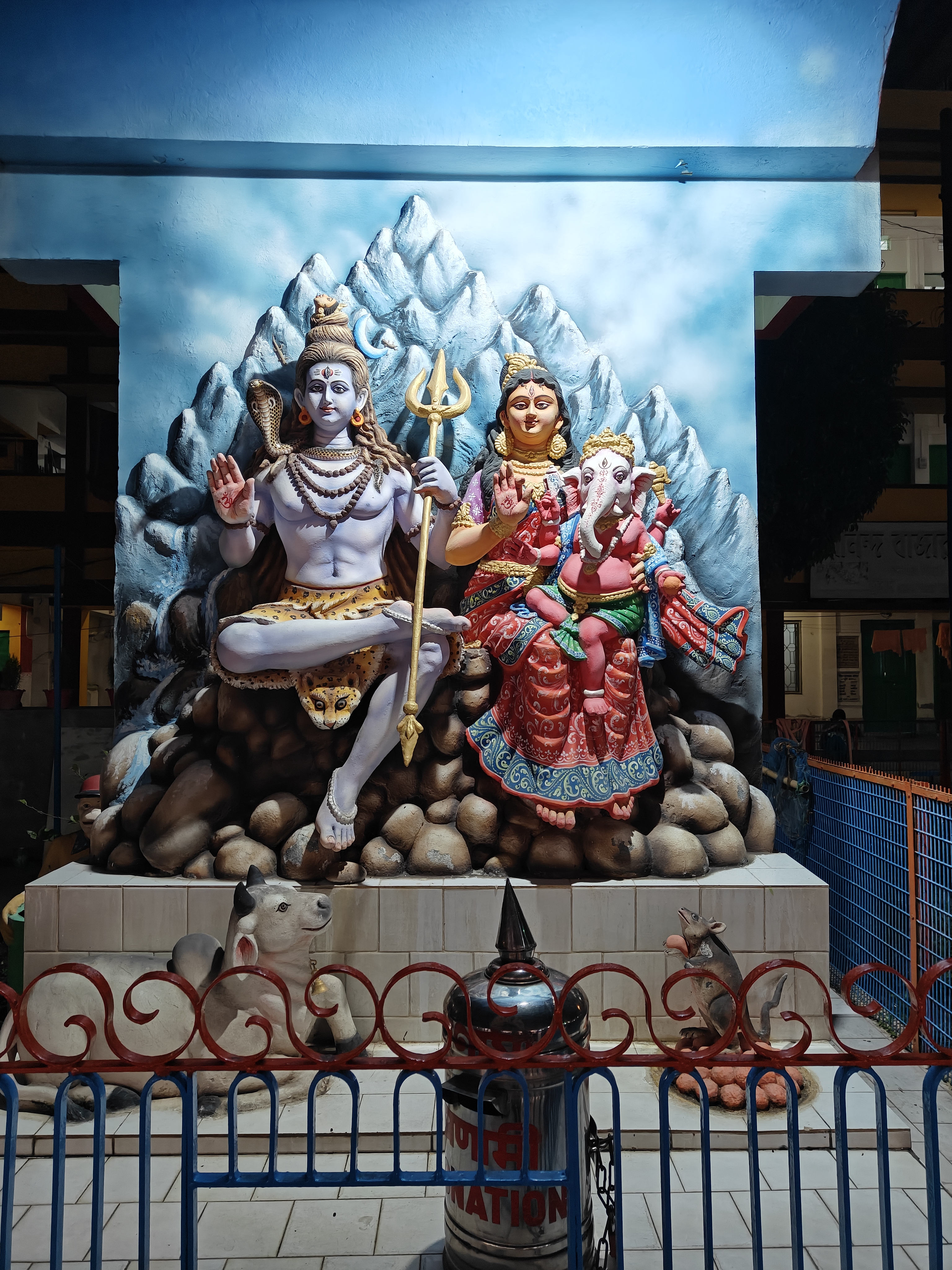
At Agartala temple taken on 22 May 2025

If I look at Agathiyar and Macaulay, the later seems to be an honest real human being who came to India with people stuck on past glory and introduced education for all. Certainly East India Companty did not come to India with the mission to teach and emancipate the locals. They came to make profits. The UK did not start ruling India to uplift the population here but to loot its wealth for its own benefit. Bengal famine was man (Churchill) made and Sashi Tharoor can talk eloquently about this. He may not like to talk about how uppercastes in Kerala used religion and their association with kings to exploit the people. The UK/Europe, likewise, would not like to characterize Churchill as a mass murderer but would characterize Hitler as one. Coming back to Macaulay, Radhakrishnan ‘s advisors from UK, after teaching him research methodology, appreciated his work and gave him the degree. They did not try to shut him down for showing that the view of Christianity about Hinduism was wrong. They were open minded scholars willing to learn from a student. However, those who created the myth of Agastya, would like the myth to continue and they are not open minded to look at any evidence.

Tamil had been in use all over India in the past. Brahui language spoken in northwest Pakistan/Afghanistan is closely related to Tamil and other Dravidian languages. Apparently, Brahui also means ‘God’s language’. Gandhi gave them a way to appropriate Brahui by saying “Ishwar Allah Tere Naam’. However, their reason for existence is to exclude Islam and hence, Urdu a language really developed in India may be considered foreign soon. Those days, everywhere, God was there for explaining things people could not understand. I suppose, this will continue as long as humans manage to keep earth inhabitable for them and survive. As a proverb in Tamil says, what we could learn is only a handful and we could never learn, is like the whole world (கற்றது கைமண் அளவு கல்லாதது உலகளவு).

People speaking Tamil have eventually settled in what is the state of Tamilnadu today in India. Of course, some Tamils have migrated to Sri Lanka, Singapore, and Malaysia [6] where Tamil is one of the official languages. Agathiyar is a mythological individual who was invented to appropriate the people and their language by people who wanted to claim Sanskrit as the mother of all languages. This is the worst anyone can do to someone else. While Prime Minister is condemning the Macaulay education, his party and Governor are trying to propogate the myth today. TN Governor Ravi and his party/group associates are not trying to honour one of the oldest language but trying to appropriate it without ever contributing to it. Tamil scholars have slammed their attempt to recreate the ‘Agashtya expedition’ based on a myth to appropriate what is not their own. [7] According to the report in the Federal website, the organizers of Kasi Tamil Sangam from IIT Madras did not respond to the critique’s comments. Unlike the advisors of Radhakrishnan from UK, the organizers from IIT Madras did not want to listen and discuss but participated in propagating the myth. They are using the IIT Madras created by Nehru who wanted scientific temper to be in the Constitution, to do exactly the opposite. Thinking about it, this is not different from the myth of Agathiyar who was invented to keep the people in dark.

Periyar came from a rich family and joined congress and worked with Rajaji, who was then a tall leader from the Madras presidency. During a visit to Kasi, Periyar was discriminated by the local Brahmins which changed him. In Tamilnadu as well, he did not like Congress party conferences serving food for Brahmins separately. I joined the Indian Institute of Science in 1997 and have written early about its beginning. [8] In this huge campus of about 370 acres, no restaurants were allowed to serve non-vegetarian food. Student hostels had separate vegetarian and non-vegetarian messes and one which served both. In the annual lunch arranged for all faculty and family, non-vegetarian food was not allowed. When I became the Secretary in the Faculty club organizing the annual lunch, I arranged non-vegetarian food for those who prefer that. Not surprisingly, that was a significant majority. While those promoting such myth get annoyed with the ‘minority appeasement’, they promote majority harassment by imposing the minority preferences in public places.

I was in a committee to bring a restaurant in the campus. The committee decided the menu and fixed prices for every item, including vegetarian and non-vegetarian dishes. When the restaurant opened, only vegetarian items were served. When I inquired with the management, they informed me that some influential people had asked them not to offer non-vegetarian dishes. After complaints from me and others, they started serving non-vegetarian dishes outside the restaurant in an open area. One day, I saw a students group wanting to sit together and the hotel management not allowing them as some of them wanted non-vegetarian and others vegetarians. They wanted to sit together and eat. I complained to the Director that IISc was practicing segregation and the restaurant started serving all items inside. This happened during 2005-2010. I can imagine how it was during Periyar’s time. Most of these staunch vegetarians did not miss a chance to go abroad for their studies, conferences or vacation and rub shoulders with Europeans, Americans, Japanese or Chinese whose primary food is meat, dominated by beef. However, they wanted the public space in India to remain vegetarian. No-one can object to how anyone lived in their home or their food preferences. While using public space, forcing a majority to follow your way of life is unacceptable. Recently, Karnataka CM was accused of having non-vegetarian when some of them were celebrating some festival. This must end. Periyar’s fight was not just about food.

Rajaji as Chief Minister of Tamilnadu did a few things that costed his position twice. During his term as CM before independence, he enforced Hindi and lost his seat. He asked Tamils to speak Hindi on the street and Tamil at home. I have written two other blogs on this issue [9,10] for those who are interested to learn more. Two things he did as CM in 1950s was to close down a large number of Government schools and introduce vacational training (kula kalvi) for students to learn their family skills, carpentry, goldsmith, … Periyar opposed both strongly and encouraged Kamaraj to take on Rajaji within Congress. Rajaji was forced to resign and his candidate for CM was defeated by Kamaraj who became the CM. Periyar asked Kamaraj to fight in Gudiyatham, far from his home, to become a Congress MLA. Annadurai did not field any candidate from DMK. Kamaraj won the election against a communist candidate.

On becoming CM, he re-opened all the schools closed by Rajaji. He stopped ‘kula kalvi’ plan of Rajaji. Kamaraj is called a ‘Leader who opened the eyes of the people through education’ (கல்விக் கண் திறந்த தலைவர்) in Tamilnadu. He is considered by some historians as the first Dravidian CM in Tamilnadu. Later, as Congress CM, when he was trying to impose Hindi, Annadurai led DMK to defeat him. In 1967, when Annadurai won and formed the first DMK Government, Rajaji was supporting him. Let me repeat: Periyar and Annadurai supported Kamaraj to become Congress CM against the policies to deny education for all. Rajaji supported Annadurai to defeat Kamaraj as he did not like some of the policies of Congress at that time. Annadurai as CM, changed the name of the state to Tamil Nadu and led Tamilnadu for two years before passing away in 1969. Like some feel about Patel who passed away within a few years after Independence, I wish Annadurai lived a few more years. Today, in Tamilnadu, one group claims Bharathiyar mentioned Tamilnadu before Annadurai. This is tried after the attempt by TN Governor Ravi to suggest the name of the state to be Tamilagam received a lukewarm response. One of the legislations Annadurai brought was to legalize marriages that were conducted without any rituals sanctified by a religious leader. As I have mentioned in another blog, my marriage was conducted this way.

During the first half of twentieth century several social reformers were fighting against caste based discrimination of fellow humans in Hinduism. Different leaders chose different paths. Ambedkar converted to Buddhism. Narayana Guru did not convert but reformed Hinduism in Kerala and ensured that upper castes do not exploit lower castes. Ramalinga Vallalar denounced all rituals and promoted worshipping only light without any form. He wore only white clothes. Gandhi preached against untouchability and wanted the temples to be opened for all castes. He had a lot of discussion with Periyar and Ambedkar about social reforms. Shahu Maharaj in Kohlapur started schools for everyone including women. When I visited Shivaji University Kohlapur, I was gifted a biography of Shahu Maharaj which was dedicated to some of the reformers including Periyar, image shown below. [11] Periyar chose atheism as he was convinced that much of the population was controlled by religion to keep them in dark. For those who follow Tamil, I would encourage you to listen to the speech in the video of Reference 4 below. For others, I have given the gist above. Periyar and Rajaji remained friends for life and they both lived to mid 90s.
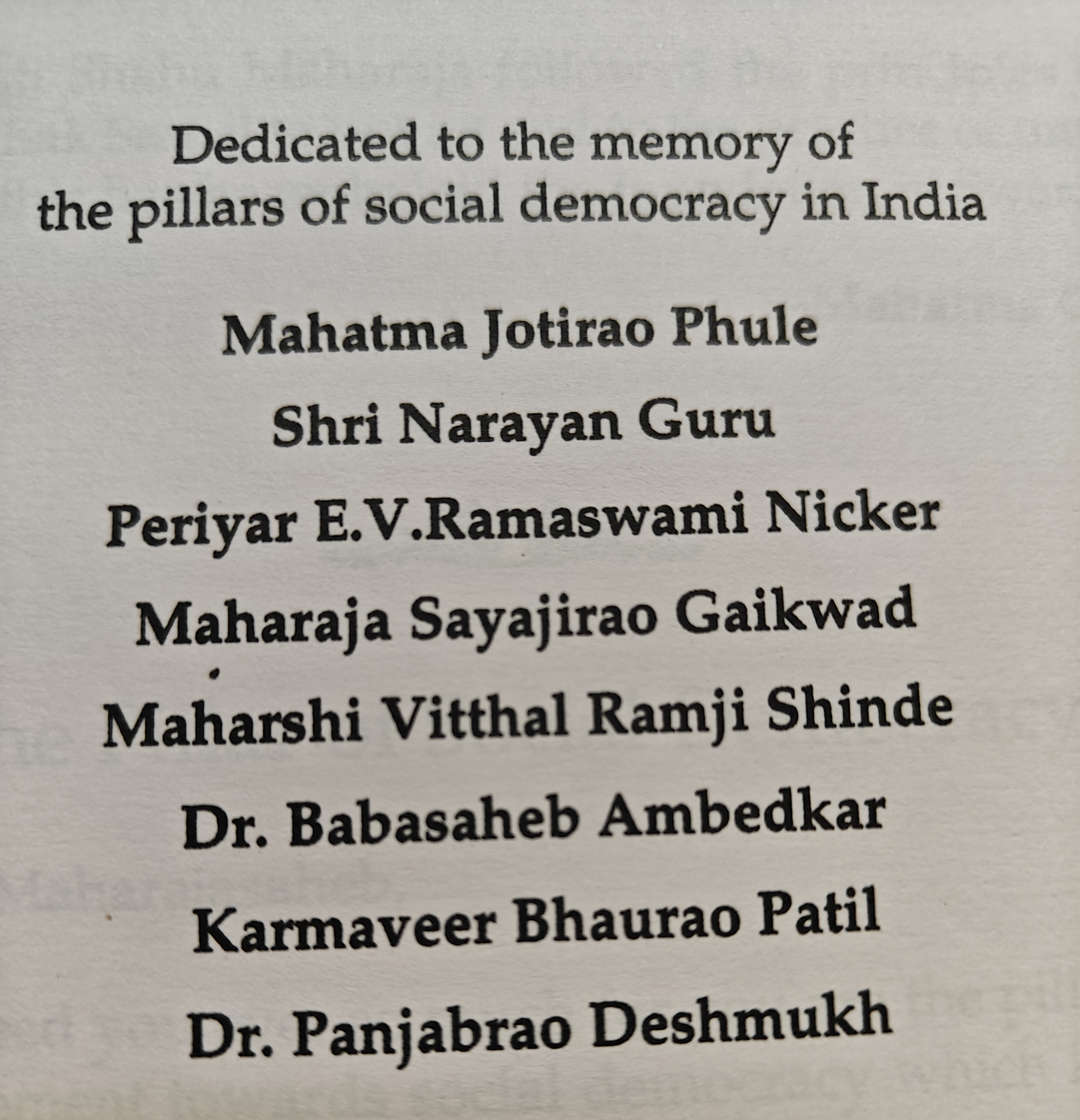
Oplus_17170464

Bharathiyar’s poems are being discussed in Tamilnadu today with every group making different claims. Bharathiyar is one of my favourite poet. I have mentioned often that he deserved the Nobel in literature except that he wrote mostly in Tamil and in his time, no one could promote him. He passed away when he was only 39 and had written from his childhood until his death. I have read his translation of Bhagavad Gita in Tamil with a long Introduction written by him. He was a staunch devotee of Krishna and wrote many poems on Krishna. He was a liberal at heart and wrote about women’s liberation and abolition of caste as well. He evolved and naturally his views evolved. For those who can follow Tamil, I recommend Sugi Sivam’s speech on this issue [12]. Towards his last years Bharathiyaar wrote “கடலினைத் தாவும் குரங்கும், வெங் கனலிற் பிறந்ததோர் செவ்விதழ்ப் பெண்ணும், வடமலை தாழ்ந்தத னாலே தெற்கில் வந்து சமன்செயும் குட்டை முனியும், நதியி னுள்ளேமுழு கிப்போய் அந்த நாகர் உலகிலோர் பாம்பின் மகளை விதியுற வேமணம் செய்த திறல் வீமனும் கற்பனை என்பது கண்டோம்”. In English “We now understand that the monkey flying over an ocean (hanuman), a beautiful woman born in a fire, the dwarf saint coming from Himalayas to balance the earth (agastya), and Bima who went under water to the Naga world to marry a snake’s daughter are all fictions’. Today, as every political party in Tamilnadu tries to own him and ask their friends to condemn him, the fact is Bharathidasan, who changed his original name of Subburathinam was active in Dravidian politics. Kalki (author of the popular novel Ponniyin Selvan and Congress supporter in those days) started promoting Bharathiyar only after his death and did not appreciate Bharathiyar’s progressive writing.

To conclude, I find those who created a myth of Agathiyar to appropriate Tamil to be more evil than Macaulay who came here and drafted an Educational policy to take education to all. The Union Government introduced the Viswakarma Program recently, which made Rajaji lose his CM position in TN. At the same time, the Government introduced a plan to take students from Gurukul (studying Vedas?) to IIT (13). On the one hand, they claim Vedas have everything that we can ever know. On the other hand, they sneak through a plan to admit students from Gurukul to IIT. If this is not an admission that Vedas do not have everything and in today’s India IIT education promises a good life, what else can be? If one were to think logically, Government should have given a plan to admit students who may qualify for Viswakarma program to IIT and help them update their skills at the Indian Institutes of Technologies. They have introduced a plan to stop the education of people who work with their hands. They introduce special plans to give IIT Education to students who go to Gurukul! Tamilnadu Government rejected the Viswakarma program and introduced another bill to support people who are above 30. Union Government introduced the bill to support youth just after their highschool. I wish a middle ground is found.

No wonder, most people in Tamilnadu today remember the important contributions of Bharathiyar, Periyar, Kamarjar and Annadurai as education for all became a motto in the state. This was continued by every CM after them from Karunanidhi, MGR, Jeyalalitha and now Stalin. The results are clear for those who want to see. Empowering the population can be the only goal for any Government. If a Government tries to promote a myth as knowledge to keep the people in dark, I would be doubtful of their intentions. Home minister wants to remove English and introduce Hindi which neither has great literature as Tamil or Sanskrit nor modern knowledge as English. Is this yet another way of keeping people in the dark? Mohan Bhagawat says he would not care about the Constitution and India is a Hindu Nation. Modi says he and Gawai rose to their positions thanks to the Constitution. I would like our Constitution to guide our growth.

References:

  1. https://en.wikipedia.org/wiki/Sarvepalli_Radhakrishnan Found on 24 December 2025.
  2. https://www.osho.com/osho-online-library/osho-talks/celebration-completion-radhakrishnan-a643cc1a-4ad?p=79716b3b872b30cfa6ab1cf65246c88a Found on 24 December 2025
  3. https://www.youtube.com/watch?v=UlWlMJZwfhA Agashtyar: A relook. Speech in Tamil.
  4. https://youtu.be/EUhLto9aQLc?si=cR4zYuoHVR0HXON7 Listened on 24 December 2025
  5. David Shulman, Tamil a biography 2016 https://www.goodreads.com/book/show/29940795-tamil
  6. Somewhat coincidentally (helped by Google and AI?) an audio-recording of a speech in Tamil by M R Radha in Malaysia was recommended by YouTube. I would recommend this for anyone interested in learning how Tamilnadu and Malaysia were in those days. https://youtu.be/LdgXUgrZaBw?si=aKEJbglkoc9e_cVw
  7. https://thefederal.com/category/states/south/tamil-nadu/tamil-scholar-tenkasi-to-kashi-agasthya-expedition-217197 (Found on 24 December 2025).
  8. https://earunan.org/2018/05/27/j-n-tata-planned-the-indian-institute-of-science-and-swami-vivekananda-did-not-influence-it/
  9. https://earunan.org/2025/10/21/birth-centenary-of-m-ilanchezhiyan-social-activist-writer-and-an-excellent-academic/
  10. https://earunan.org/2019/09/14/languages-in-india-some-experiences-and-a-suggestion/
  11. Jaysingrao Pawar, “Rajarshi Shahu Chhatrapati: A social revolutionary”, Maharashtra Ithihas Probodhini, Kohlapur. 2013.
  12. திருப்பரங்குன்றம் யாருக்கு சொந்தம் | Suki Sivam Speech | Thiruparankundram – YouTube Accessed on 24 December 2025.
  13. https://timesofindia.indiatimes.com/india/government-throws-open-iits-for-students-from-gurukuls/articleshow/122961118.cms#:~:text=India’s%20education%20policy%20is%20undergoing,modern%20scientific%20and%20academic%20inquiry. (Accessed on 25 December 2025)
Standard
Uncategorized

Birth centenary of M. Ilanchezhiyan, social activist, writer and an excellent academic!

Some time ago, one of my colleague informed me of a space-time graph in which one can place individuals depending on the influence they had. All humans have the common origin and each one is represented by a point depending on how far their name and fame extended in space and time. Most human beings lie very close to the origin with their influence only extending to their family in their lifetime. Leaders who transformed societies for the better or worse would appear diagonally far away from the origin, as their influence goes beyond their birth place and date. This graph has only positive axes. The distance between the person and those who learn about the person is given in x axis and the time difference between the two is given in y axis. As one can see, no one who lived before the person’s time could know about the person. Some names that come to my mind are Thiruvalluvar, Auvayyar, Buddha, Asoka, Jesus, Raja Raja Chola, Cleopatra, Da Vinci, Napolean, Lincoln, Marx, Hitler and Gandhi. These people are known to many living all over the world for centuries after their birth. It is likely that there are several others in the human history who made contributions which influenced beyond their time and space but remain anonymous. During the time of Goutam Buddha and Mahavir, Makkhali Gosala founded Ajivika (aseevakam in Tamil) and he remains unknown to most now (1). From what I read, Makhali Gosala had thoughts that resonate with me today. Both he and his religion have disappeared now and maybe humanity had been influenced by his thought without knowing. Considering my experience over the last 60 years, I can think of a few whose contributions last but their names fade away. Several of the very influential people that I had known when I was young, are virtually unknown to the youth of today. A. R. Venkatachalapathy, Sahitya Academy winner for Tamil books in 2024, wrote the biography of V. O. Chidambaram Pillai (2), who is popularly called as ‘Kappalottiya Thamizhan’ (Tamil who owned a ship). To my surprise, I found out that most of the youth of today have not heard of him.

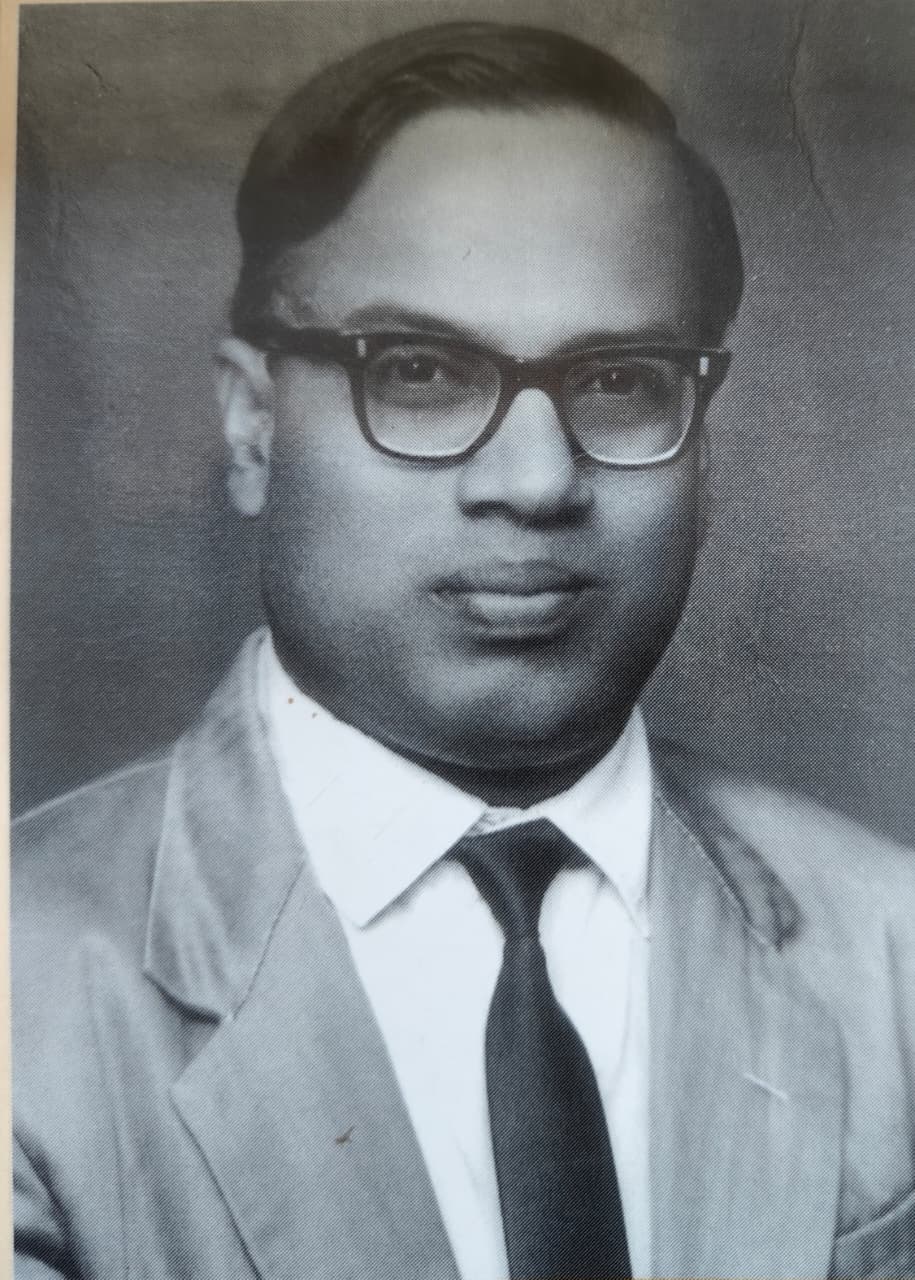
Today, 21 October 2025 happens to be the birth centenary of Prof. M. Ilanchezhian who lived in Chennai and Kanchipuram and contributed a lot in his lifetime. I suspect, very few living today know of him. I must reveal that I got to know him as he happens to be my wife’s uncle (elder brother of her father).

There is a Wikipedia page on Prof. M. Ilanchezhian now (3). He was born as the first child of Manikkavasagam and Abirami Ammal in Perunagar near Kanchipuram on 21 October 1925. Father Manikkavasgam was very concerned about the disparity in society we had during his time. Besides, the status of Tamil language in the then Madras state was rather poor. India has a group of people who managed to remain powerful and Tamil was mentioned as ‘narabasha’ (language for the people) and Sanskrit was mentioned as Devabasha. Besides, all classical music festivals would have songs in Telugu and Tamil was forbidden. Tamil is among the oldest language that is still widely spoken and has a rich literature starting from more than two millennia ago. In the middle of last century, Dhandapani Desikar sang in Tamil in Madras (Chennai now) and this upset the organizers. They decided to wash the stage with cow urine claiming the stage has been polluted (4). The popular magazine Kalki wrote an editorial justifying the action. This was strongly condemned by many in the state. After sensing the mood in the state, editor and popular novelist Kalki changed his stand. He had himself written beautiful songs in Tamil (kaatrinilae varum geetham comes to mind). This was sung by M. S. Subbulakshmi and the song was very popular (5). His novel Ponniyin Selvan was very popular as well and made into to a successful movie recently by Maniratnam. Nadars were not allowed to enter the Meenakshi Temple in Madurai and Mookka Nadar was lynched for defying the ban. I have written another blog on this (6). Times have indeed changed now. Recently, I visited Thiruchendur and found out that Shiv Nadar had donated for renovation of the Temple. I understand he donated funds for building the Kalaingar Karunanidhi Library in my hometome Madurai as well. However, during the first half of 20th century, the situation demanded a social reform movement. For most of the people birth determined what one could hope to do in life. Justice party was founded with the main objective of social justice. This led to the Dravidar Kazhagam (DK) and Periyar was invited to lead the organization. Manikka Vasagam was very active in Justice Party and then DK. He had changed his name to Manimozhiyar and was popularly known as Kanchi Manimozhiyar (7). He pushed Annadurai to start a political party and DMK was born. He was an MLA from Saidapet and stepped down to make Karunanidhi an MLA from Saidapet. Though he did not contest, he actively campaigned in the consituency. His son Kumarasamy was with him through all these and changed his name to Ilanchezhian.

Ilanchezhian attended Muthaialupettai High School and completed his SSLC (Secondary School Leaving Certificate), which was after completing 11 years of School. Tamil Nadu had 11+1 school and pre-university before starting college those days. This became 10+2 just after I completed my SSLC. He got BA(Hons) in Economics from Pachaiappa’s College, Madras. He joined Pachaiappa’s College in 1952 as a faculty in Economics. He became a Professor and Head of the Department and moved as Principal at Pachaiappa’s College in Kanchipuram. He also served as Principal at Kandasamy Naidu college before retiring in 1984. However, before he started his academic career, he was actively involved in Justice Party, DK and DMK. He worked as co-editor for the newspaper titled ‘Porwaal’ (War sword) with Manimozhiyar as the Editor. He wrote Editorials which were powerful. His Editorials were published as a book in 2009 (8). He authored a book titled ‘Thamizhan thodutha por’ (War waged by Tamils) telling the story of the anti-Hindi protest that controlled the state politics (9). The cover of the book is shown in the image below. The father-son duo were very active in the social reform movement of the Madras state. It is thanks to the work of many like them that all around development is seen today in Tamil Nadu.

I read a news recently about the Madhya Pradesh Government telling the Supreme Court in India that Caste was founded on Social Harmony (10). When I read a statement like this proposed by a Government or those holding power, I cannot but think how hollow they sound. Ambedkar did not believe Hinduism will solve the problems originating from the caste hierarchy and converted to Buddhism before he passed away. He wrote a book titled ‘Annihilation of Caste’ (11). I would be happy to read from the sections that were at the lower end of caste hierarchy declaring that ‘caste is a western conspiracy and we enjoyed the social harmony’. If these statements come from those who are on top, I see only a conflict of interest. They are justifying a system that allowed them to rule and prosper.

One of the decisions Justice party made was to introduce reservations. Today, it is difficult to miss memes that claim reserved category students got admission after securing zero marks in some parts of India. In 2012, I found out that the minimum marks required form admission to MBBS in Tamil Nadu was very similar across all categories. This was possible as the reservation helped all sections to grow. I wrote an Editorial in Current Science giving the data (12). I had written a blog on reservation in India and affirmative action in the USA earlier (13). I was just reading the autobiography of Katalin Kariko (14), winner of Nobel prize in physiology in 2023. Her father was a butcher and she grew up in postwar Hungary, a communist nation under the umbrelage of USSR. She mentions about school students names ending with F, indicating that their parents are physical labourers. Hungary thought children of labourarers should be educated and created opportunities to do it. Birth should not decide the future f any kid. Most everyone who has completed high school would have learned about the van der Waals equation (15). van der Waals was from a carpenter’s family and Netherlands decided to give education to all when he was young. He started school late and got his Ph. D. when he was 36. It had the equation named after him. Curt Witting was born in a place that was captured by different countries of Europe in his earlier years. His mother took him in a boat to Chicago where he grew up in a bad neighbourhood. Illinois decided to educate all children irrespective of their background. He became a successful experimental physical chemist having a great career at the University of Southern California (16).

Our caste and patriarchy all over the world may have given social harmony, when no one questions hierarchy. As they say, if you love someone, set them free. If they come back they are yours. If not, they were never yours. Using societal controls and planting a narrative of social harmony may bring stability. Not growth. To me this could certainly be one of the reasons for India not growing in the last millennia after having a great past. People like Ilanchezhiyan and Manimozhiyar fought for social justice and to a large extent they achieved it. It is a pity that many who benefitted from their thoughts and actions do not know them. Much worse, some of them are led to believe that they have been cheated by this movement and we should return to the glorious past. I do not know where Prof. Ilanchezhian would appear in the graph, near the origin or away in the diagonal. I am certain that his contributions have helped humanity. On his birth centenary, I remember him with gratitude.

References:

  1. https://www.britannica.com/topic/Ajivika I found this to be a good cite to learn some history. Accessed on 21 October 2025.
  2. A. R. Venkatachalapathy, Swadeshi Steam, Penguin Books (2023)
  3. https://en.wikipedia.org/wiki/M._Ilanchezhian Accessed on 21 October 2025.
  4. I found a historical article on this by a Japanese author and will add this here. Most today are not aware of this and they do not understand the reasons for the protest. This incident was also discussed in ‘Aettikku potti’ a feature in Kalki magazine.
  5. I love this song: https://www.youtube.com/watch?v=ikqFFjO_2cg
  6. https://earunan.org/2015/02/01/rosa-parks-and-mooka-nadar-recent-tales-from-the-worlds-oldest-and-largest-democracies/
  7. https://en.wikipedia.org/wiki/Kanchi_Manimozhiar accessed on 22 October 2025
  8. Thalayanga Ilakkiyam (Literary Editorials) Vasantha Publications, 2009 (Contains 30 of the impactful editorials published in Porwaal).
  9. Archive can be found here: https://archive.org/details/230225-193143/page/n25/mode/2up The book is still available.
  10. https://indianexpress.com/article/india/madhya-pradesh-govt-caste-system-founded-on-principles-of-social-harmony-10309526/ accessed on 21 October 2025.
  11. https://ccnmtl.columbia.edu/projects/mmt/ambedkar/web/readings/aoc_print_2004.pdf accessed on 21 October 2025.
  12. Editorial available online 0555.pdf accessed on 21 October 2025.
  13. https://earunan.org/2015/05/27/reservation-vs-merit-in-india-or-affirmative-action-vs-equal-opportunity-in-the-usa/
  14. https://www.penguin.co.uk/books/462526/breaking-through-by-kariko-katalin/9781529936391 accessed on 21 October 2025.
  15. https://en.wikipedia.org/wiki/Van_der_Waals_equation accessed on 22 October 2025
  16. https://curtwittig.com/ accessed on 21 October 2025.

Standard
Uncategorized

Gandhi, King and Mandela

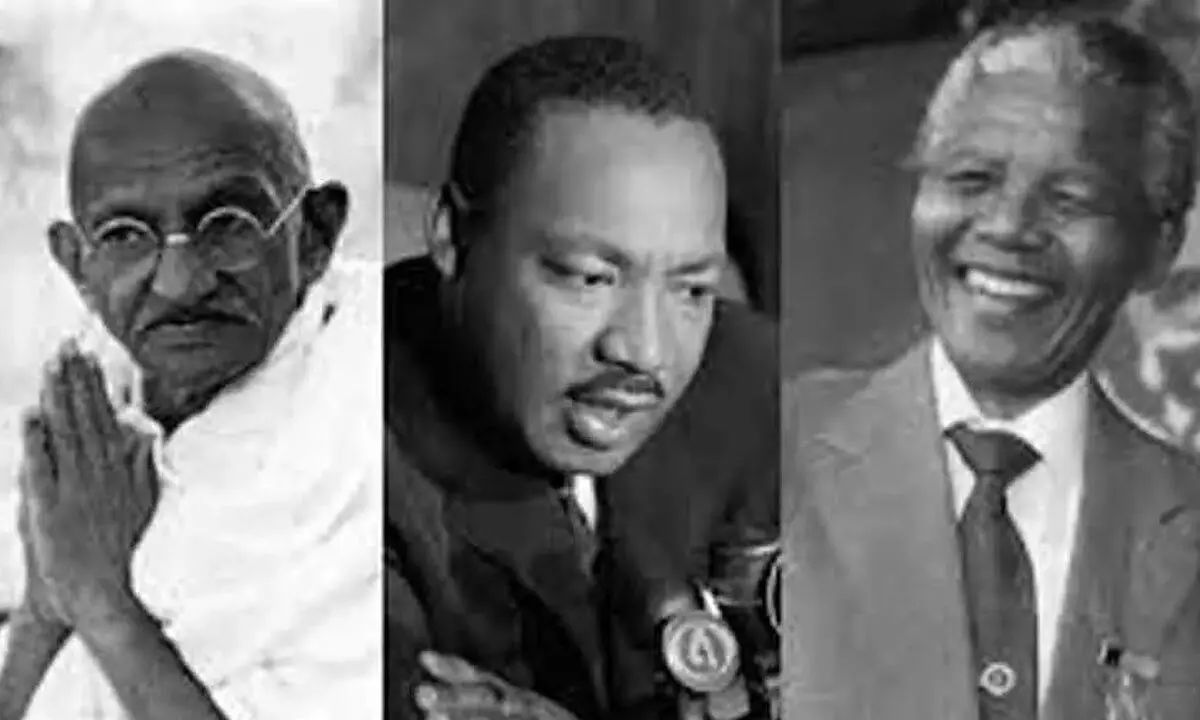
On this 2nd October 2025, Gandhi Jayanti (birth anniversary), I am trying to remember these three men who had enormous influence in the World. Not just in world politics but also in influencing the masses. I had written a blog earlier about Gandhi’s visit to IISc on 12 July 1927 (1).

I am very active in Facebook and have posted my views on everything that interests me now and then. I watched the movie “American Sniper” directed by Clint Eastwood and released in 2014, recently during a long flight. The sniper (Chris Kyle, performed by Bradley Cooper) says once: An eye for an eye! I was reminded of one of the famous quote by Gandhi: Eye for an eye will make the whole world blind. I posted about this after returning from the trip. Apparently, it is an age-old concept and appears in the book of Exodus in Bible, Old Testament (Exodus 21:24) according to a Google search enabled by AI today. Humanity has been discussing about crime and punishment since we started living as a society. One of the successful movies of Director Shankar, Anniyan, lists out punishments for some crimes from Garudapuranam and it was horrifying. Nassim Nicholas Taleb discusses evolution of moral symmetry in his popular book “Skin in the Game” (2). He talks about silver rule (Do not treat others the way you would not like them to treat you) and golden rule (Treat others the way you would like them to treat you) and says silver rule is better. He points out that the silver rule tells you to mind your own business and not decide what is good for others. I see this in the life of Mohandas Karamchand Gandhi, who became known as Mahatma Gandhi (Mahatma meaning a great soul).

Mohandas was born in a well-to-do family in Porbandar, Gujarat. As a child, he had read the story of Harishchnadra, who would always speak the truth without worrying about the consequences. He trained as a Lawyer at the Inner Temple in London and started practicing law when he was 22. Clearly, he was not an activist yet. After 2 years of not so successful practice in India, he went to South Africa to represent an Indian merchant in a lawsuit. He lived in South Africa for 21 years. His life in South Africa transformed him completely and he became a civil-rights activist. While traveling in First Class in a train, he was thrown out of the train as First Class was only for the Whites. Most humans, irrespective of their space and time, may have felt discriminated at some point in time in their life. Rarely, any of them recognize that they may have discriminated others in other circumstances. Gandhi was different. He immediately realized that people were discriminated in India based on caste and we had untouchability practiced at that time. He followed the silver rule quoted above. He chose non-violent means to fight for the rights of every human being. His autorbiography was titled ‘Experiments with Truth’ and he embodied truth and non-violence. He returned to India in 1915 and led the freedom movement and is widely considered the Father of Nation in India. Even today, I see a lot of people who are convinced that they should be treated well even while treating fellow citizens with contempt. Ironically, some of them now call Gandhi a hypocrite.

While on a visit to the Indian Institute of Science, he pointed out that the 30 Lakhs donated by Tata and also the generous contributions from the Mysore King, both originated from the same labour of the poor millions! He accused the elites of taking the poor for granted and acting as if ‘they knew what is good for everyone’. One can see why Taleb preferred silver rule to the golden rule. Gandhi wanted all the research efforts to have the welfare of the poor as the main objective. As I mentioned in my blog, I do not really agree with this as a true scientist has to pursue research in search of truth, which Gandhi wanted to represent. The outcome may or maynot benefit the poor immediately or eventually. He said ‘No taxation without representation’ and that is the Skin in the Game given as title by Taleb. I read about the shut down of the US Government which would affect every Government employee, except the ones in Congress and Senate and all those directly involved in the Government. All these law makers have exempted themselves from any such shutdown that would affect salary disbursement to the employees. Clearly, they have no skin in their game. Gandhi did. He influenced the world population significantly. Einstein once remarked: “Generations to come will scarce believe that such a one as this ever in flesh and blood walked upon this earth”.

Among the leaders who were significantly influenced by Gandhi are Martin Luther King, the civil rights activist from USA and Nelson Mandela from South Africa. Decades after Gandhi left South Africa, the native africans were exploited by the White settlers. Eventually, the whole world boycotted South Africa and apertheid was lifted and democracy born. Nelson Mandela was in prison for three decades. He was released and won the election to become the President of South Africa. He once remarked: If you want to make peace with your enemy, he becomes your friend. It would have been easier for him to arrest everyone who was responsible for prisoning him and put them in prision. Eye for an eye. Real leaders want everyone to grow together. Clint Eastwood made another great film on Mandela titled ‘Invictus’ with Morgan Freeman portraying Mandela. Despite the uneasy relationship with the White settlers and the native Africans based on mutual lack of trust and respect, Mandela realized the importance of building trust and respect. He also realized the importance of sport and discussed with the White captain of Rugby team Francois Pienaar, played by Matt Daemon and supported them to win the World cup. Mandela’s objective is peaceful coexistence and progress and was never divisive.

Martin Luther King was influenced by Gandhi and led a non-violent movement to end civil discrimination in the US. Though slavery was abolished by Lincoln in the 19th century, discrimination of the native americans and african americans continued until the 1960s. I had written a blog about Rosa Parks, who was asked to vacate a seat in the bus for a white man earlier (3). When a White law maker reminded King that no law will make a white man love a black man, King responded: I want a law that will forbid the White man from beating up a black man. He was particular about the well-being of all his followers. During a march for voting rights from Selma to Montgomery, with a brutal police force awaiting them, King called off the march and returned. His followers were upset, angry and confused. He abandoned the march as he feared for violence and loss of lives. He eventually succeeded in his attempts to get voting rights for every citizen through legal and non-violent means.

The photos taken from https://www.thehansindia.com/hans/opinion/news-analysis/relevancy-of-gandhi-king-mandela-ideals-802437

Prior to Gandhi, we had Buddha and Jesus. One of the popular songs of the cine-actor turned politician, MGR, film starts with the question ‘Why were Buddha, Jesus and Gandhi born? They were born to uplift the humans’ (4). This was written by Vaali, who had penned many songs for MGR. MGR in another film song, also written by Vaali, characterized Annadurai, the first CM of Tamil Nadu from the Dravidian movement as Gandhi of South (5). Annadurai was always against his party workers losing their life and career and he advised them to be mindful of their responsibilities. He brought in changes to the society through convincing people, winning elections and bringing in laws. One such law sanctifies marriages conducted without any rituals and not sanctifed by a religious head. Somewhat coincidentally, my marriage was conducted in this way and it is legal thanks to the law he brought in. Taleb in his book classifies people in to three different kinds: People with no skin in the game, skin in the game and skin in the game of others or soul in the game. His example for the three kinds are politicians, activists and revolutionaries (dissidents). Those with no skin in the game seek awards, prizes, honors, ceremonies and medals. Those who have soul in their game get the highest (even only) award which is death for one’s ideas and positions. He lists Socrates, Jesus, Saint Catherine, Hypatia and Joan of Arc. We have added Gandhi and King to the list. Thankfully, Mandela had a full life. Buddha managed it too. However, the powers that be who were affected by Buddha’s rebel could ensure that his fight against rituals was annuled eventually. Will the humanity ever learn and progress together?

References:

  1. https://earunan.org/2017/07/11/indian-institute-of-science-on-12th-of-july-mahatma-gandhi-and-morris-travers/
  2. Nassim Nicholas Taleb, “Skin in the game: Hidden asymmetries in daily life”, Penguin Books, printed in India by Thomson Press India Limited, New Delhi. Page 19.
  3. https://earunan.org/2015/02/01/rosa-parks-and-mooka-nadar-recent-tales-from-the-worlds-oldest-and-largest-democracies/
  4. https://www.youtube.com/watch?v=6TsCVgK5umM
  5. https://www.youtube.com/watch?v=RY3Q-PDv9qg

Standard
Uncategorized

Even by crossing the oceans, chase wealth!

I suspect anyone who has seen the title and decided to read this blog could guess what I plan to write. Fulfilling an election promise, Trump decided to deport illegal immigrants from various countries in an army flight. Columbian President Gustavo Petro posted bravely lecturing Trump and within a few hours had to toe the line. He decided not to let US deport Citizens of Columbia in an Army flight as criminals and arranged Columbian flight to bring its citizens back with some diginity. An army flight from US deported 104 Indian citizens and the men among them were handcuffed and chained during the long flight that landed in Amritsar. Some are pointing out that the illegal immigrants have indeed committed a crime and deserved the treatment. Opposition parties are appalled at the inhuman treatment of Indian citizens. External affairs minister has pointed out that US has been deporting our citizens periodically and about 15000 have been deported since 2009, when the second UPA term started. I do not have any comments about the reactions of the ruling or opposition parties. I was thinking about my flight to USA in 1986, when I went to the Kansas State University to do my Ph. D and some of what I have read in Tamil.

During the mid 1980s, there used to be email groups in the USA, named soc.culture.xxx where members could exchange emails among themselves. This could be the earliest avatar of social media, like Facebook, Twitter or WhatsApp. I joined the soc.culture.india. I found one email with a title ‘x+1 syndrome’. It discussed about the life of a typical graduate student, like me, coming from India. I could relate to some parts of the article. When one reaches US, take some photographs in front of the University/Department and send it by airmail to the family to be received in typically 2 weeks time. The first car, first snow, and many other things are recorded in a film, devloped into a photo and sent by airmail. In a few years, the student would be informed by the parents that a suitable girl could be found for him to be married. Student goes home, gets married and returns to US with the bride. In due course, wife is expecting. The next sentence I read, hurt my pride: No right thinking parents in law would like to have their grand kid born in India, given the American alternative. I did not like this. I found out that I did not follow some of the typical characteristics given of a graduate student from India. My answer about ‘what would you do after studies?’ did not change throughout my stay there: Return to India. The article points out how it changes over a period of time. The main theme of that article was that no one returns from US and they keep saying they would return in the x+1 year with x changing always. I did get married and fortunately for me, my wife was also keen on returning home. I was prepared to accept a job wherever I would get. IITs, IISc, State Universities, Colleges, high schools wherever, as decision to return was final. It did not depend on what job I might get. We returned in 1994 and lived here since then. I have no regrets. I read news about some parents opting for pre-mature delivery, just in case Trump would bring in a law that would forbid their kids from being citizens of US. As I mentioned in a WhatsApp group, this is where the line dividing desire and greed blur. Greed could lead to disaster.

There is a proverb in Tamil which says ‘திரை கடலோடியும் திரவியம் தேடு’ (thirai kadalodiyum thiraviyam thedu) which roughly translates as the title of this blog. Literally ‘Run through the ocean and search for wealth’! Of course no one can run through the ocean and I am sure everyone gets the essence of this proverb. Wealth is important and only the super rich can say ‘money does not bring happiness’. Everyone else needs money to lead a dignified life. Most would like to find an honest way to earn what is needed. Those who are unable to earn what they consider as ‘enough’ where they are born, go wherever required to earn more. It could be to the nearby or far away cities in India or Abroad. This has been happening for several millennia. Columbus wanted to go to India through West and ended up in West Indies, which he was convinced was India until he died. There is a good satire by Trevor Noah, about Columbus’s confidence which comes naturally for the rich and affluent (1). Poor may be more doubtful about what they do.

Large number of Keralaites have gone to Arab nations in the recent decades leaving the family in Kerala with the hope of raising the standard of their families. Canada has a significant number of Sikhs. US had 5.1 million people of Indian origin, 1.47 % of its population in 2023 according to Wikepedia now (2). Gujarat and Panjab used to dominate the list of immigrants in the past and in recent decades people from Andhra, Telengana, West Bengal, Tamil Nadu, Maharashtra, Karnataka and Kerala are migrating in large numbers. Most readers may have heard about ‘ABCD’ meaning, American Born Confused Desi. One of my friend told me about ABCDEFGHIJ, American Born Confused Desi Emigrated from Gujarat Housed in Jersey. A Chemistry Professor from Rutgers University gave a seminar in our Department and showed the ballot paper from New Jersey which had the names of the candidates in Gujarati and English. Tamils have migrated to many places in the World over centuries: Sri Lanka, Singapore, Malaysia, South Africa, Canada, France and USA and settled there for good. Tamil is one of the four official languages in Singapore. The great Tamil Poet Bharathiyaar has a poem lamenting the conditions of Hindu workers, from Tamil Nadu, in sugarcane fields in Sri Lanka:

கரும்புத் தோட்டத்திலே – அவர் karumbuth thottaththilae – avar
கால்களும் கைகளும் சோர்ந்து விழும்படி kaalgalum kaigalum sornthu vizhumbadi
வருந்து கின்றனரே! ஹிந்து varunthu kinranarae! hindu
மாதர்தம் நெஞ்சு கொதித்துக் கொதித்துமெய் maathartham nenju kodhithuk kodhithumei
சுருங்குகின்றனரே – அவர் surunguhinranarae – avar
துன்பத்தை நீக்க வழியில்லையோ? ஒரு thunbaththai neekka vazhiyillaiyo? oru
மருந்திதற் கிலையோ? – செக்கு marunthithark killaiyo
மாடுகள் போலுழைத் தேங்குகின்றார், அந்தக்… maadugal poluzhaith thaenguhinraar, anthak …

In 14th Century, Pattinathaar lived in Kaveripoombattinam in what is Tamil Nadu today. He hailed from a rich mercantile family. He sent his son in a ship and asks him to bring weath. The son brought only sacks filled with paddy husks. Pattinathar got upset and angry and locked his son in a room. He went to the harbor and threw the sacks with paddy husks. He saw that they were all gold flakes/dusts and precious gems were hidden inside. He rushed back to the room where his son was locked. Son was not found and only a palm-leaf with a sentence written in Tamil ‘காதற்ற ஊசியும் வாராது தான் கடை வழிக்கே’ (Transliteration: kaathatra oosiyum vaaraathu thaan kadai vazhikae, Translation: Even an earless needle will not come with you in your final journey). In this story, the son is thought to have been divine and Pattinathaar realizes the futility of material life and renounces everything to become a Sanyasi (a Monk). While such stories tell us about some hard facts in life, we cannot forget that living in this world requires money / wealth. I remember another proverb in Tamil which says “பொருள் இல்லார்க்கு இவ்வுலகம் இல்லை, அருளில்லார்க்கு அவ்வுலகம் இல்லை” Porul illaarkku ivvulagam illai, arul illaarkku avvulagam illai, which means ‘this world is not for people without materials, that world (heaven, God’s abode?) is not for people without divine blessings’. (Added on 25 Feb 2025. Following a post by Kathir Krishnamurthy, I realized that this proverb has its origin in Thirukkural, verse 247 which is hardly a surprise: அருளில்லார்க்கு அவ்வுலகம் இல்லை பொருளில்லார்க்கு
இவ்வுலகம் இல்லாகி யாங்கு)

As a Scientist who has no understanding of God, I am not sure if that world exists. We do exist in this world and it is important to earn enough to lead a life with dignity. If one has not learned to earn and lead a life in ‘this world’, perhaps they can go to Himalayas and live alone in search of the other World. There is a popular song in Tamil from the movie Chandrodayam in which MGR and Nagesh act “காசிக்கு போகும் சன்யாசி உன் குடும்பம் என்னாகும் நீ யோசி”, ‘kaasikku pogum sanyaasi un kudumbam ennaagum nee yosi’ which translates into ‘oh monk on your way to Kaasi, did you think about what will happen to your family? My previous blog discussed my views about a Family. For most of us, it is important to find a way to earn and live within our means. I do hope everyone finds a way to lead a life with dignity. One needs to have some desire to earn and improve our lives and be supportive of our family. It is very important not to become greedy. It may be difficult to find out when our desire becomes greed. The recent movie ‘Lucky Bhaskar’ has a story which has the hero realizing this and leading a good life.

References:

  1. Trever Noah, “Where was I” Standup comedy show.
  2. https://en.wikipedia.org/wiki/Indian_Americans accessed on 8 February 2025

Standard
Indian Institute of Science, Uncategorized

Faculty Recruitment in Institutions with Emphasis on Teaching and Research!

I have been planning to write on this topic for sometime and finally the Editorial published in Current Science dated 10 July 2018 triggered me (1). I wanted to write this as there had been a huge response to another editorial I wrote three months ago on conflict of interest in Indian Science (2). I had written some other editorials and several comments in Current Science (3) and these have attracted comments from a few with similar views, mostly from the Academia. However, the Editorial on Conflict of Interest elicited applaud from many and anger from some, in the academia. Many appreciated this for speaking the truth. What surprised me was that this Editorial was also covered by some news media, http://www.dailyo.in (4). Dinesh Sharma titled the news as ‘How conflict of interest is murdering Indian Science’.  I was worried about the news  coverage of academic matters, given that news has to be sensational. Indian Science is alive. Of course, it is not performing to its potential, which is perhaps true for many things in India. Conflict of interest is certainly a factor that is affecting it.

Another unusual comment I had for my editorial follows: “pl do not become a knight in shining armour. The matters are nuanced. You have a large following. They should not go tilting at all the wind mills”. Though, I had disagreed with this comment at that time, I do share some worries. In fact, Saibal Gupta has articulated my worries well in his editorial. (1) His editorial is about ranking Institutions and how all the various numerical indices may not be able to identify great faculty candidates. He goes on to say: “What might the solution be? This is a difficult one, as it involves the ability, confidence and wisdom of our faculty selectors to be able to look beyond ‘numbers’. For reasons not entirely academic, and we must admit, our own transgressions over time, academic decisions that do not conform to the ‘number’ game have become legally open to challenge, and can easily become fodder for a news-hungry media that is ‘looking’ for evidence of academic corruption. We need to convince ourselves that there is space for admitting people who we recognize as good in the fundamentals, and who we believe would be able to think ‘differently’.”

There has been some ‘transgressions’ as Gupta points out and there have been clear cases of conflict of interest as I pointed out. However, one should not forget the fact that many institutions, in particular, IITs and IISc, have sustained quality for many decades. This would not have been possible if the whole system was corrupt. I do believe that there is always room for improvement and perfection would remain a goal, that is never attained. On the other hand, I have also seen that the perception of corruption in India, in every field, may be far higher than the real corruption.  Anyone who is not selected may conclude, there is corruption everywhere. Obviously that number would be large. We do have honest people in every system and India has been surviving and growing thanks to the tireless work of many such people.

I wanted to share with everyone interested some information about how a faculty member is selected. I have been directly involved in this for about a decade now. A committee looks at all the applications and decide whether or not to consider the applicant further. There are many reasons why an application may not be considered further. Our Department does not like to inbreed i.e. none of our Ph. D. students are generally considered for faculty positions in our Department. There are other Departments in IISc and also other Institutions, that may not share our view. Another reason a candidate may not be considered is because the Department may not be looking at some research areas at that point in time. If for example, one theoretical chemist was hired recently, and the Department is not keen on hiring another theoretical chemist, applicants record would not matter. The number of publications, impact factor, number of citations and h-index, none of them may count.  If the research area of the candidate is considered to have significant overlap with that of an existing faculty  member, not just the recently hired ones, that applicant is unlikely to be hired as well.

At any point in time, we may like to hire faculty members in some areas. We do look at the candidate’s record in terms of past publications and future research plan. We do not necessarily go by the number of publications, impact factors of the Journals in which they are published and citations. Particularly, in my field, for example, the Journal of Chemical Physics, has a good reputation though it may have a lower impact factor than the Journal of American Chemical Society or Angewandte Chemie. One doesn’t have to be a rocket scientist to figure out that only a small number of papers dealing with physical chemistry/chemical physics are published in these ‘general chemistry’ Journals. Even among the few papers appearing in these Journals (and also the ‘general science Journals like Science and Nature), most have dramatic conclusions about topics that have huge appeal to chemists/scientists. I can cite two examples that I am aware of. In 2013, Science published a paper on ‘visualizing hydrogen bonds’ and the authors were from Physics and Chemistry Departments (5). It was covered in all magazines and I wrote a ‘Research News’ in Current Science as well (6). Later on a more detailed study questioning this interpretation was published in Physical Review Journals. I can only guess Science refused to publish them. (7) That is only for the experts.

Somewhat coincidentally, in 2013 Science had published a paper on the first observation of the ‘Criegee intermediate’ which is very important in atmospheric chemistry (8). Science was not interested in publishing a more thorough work, which provided more accurate and thorough data and that was published in the Journal of Chemical Physics (9). This work was done by Y. P. Lee and coworkers from Taiwan. I was listening to him during the Asian Spectroscopy Conference in Taiwan in 2017. In his talk, he mentioned the following: “We have published several papers on this important intermediate and the significance of these papers is inversely related to the impact factor of the Journal in which these are published” Scientists know the difference and it is what we call a ‘peer evaluation’. This appears as ‘perception’ in World ranking . Peer evaluation, appearing as perception in these ranking should not be confused with what a commoner might think about perception. In judging Science, peer evaluation is not perfect, but there is nothing better.  I just heard from someone that UGC was planning to remove this ‘perception’ in national ranking, and I think it is a bad idea. Most from India may have heard about Vashishta, an ancient saint. To be certified as a ‘great saint’ by Vashishta was considered the greatest of honor a saint could get. In Tamil “வஷிஸ்டர் வாயாலே பிரம்மரிஷி’. Peer evaluation is just that.

Candidates who work on the same areas from Ph. D. to postdoc and have plans to continue in the same area are unlikely to be considered irrespective of the impact factors and citations. When we look at the postdoctoral work, we try to judge if there is any original contribution from the candidate. Candidates have to show and prove that they can think independently. That they can identify an important unsolved problem and know how to tackle it. Once a candidate is shortlisted, (s)he is invited to give a talk based on past work and also a talk on future research plan. All faculty members attend these talks and ask questions. Reference letters from referees suggested by the candidate and also some experts working in related area are sought. These letters play a crucial role. Often, faculty members who have supervised and/or worked with a candidate are the best judges and most provide an honest evaluation of the strengths and weaknesses of a candidate. When I returned to India, I have had requests from students with whom I had no interaction, asking for a reference letter. I have always refused. These letters are not to be confused with ‘recommendation’ as commonly known in appointments in India. I cannot recommend a son’s friend or a friend’s son for any job. I can recommend my students and anyone else with whom I have worked based on my observations.

Candidate gets to meet with all faculty members and discuss for about 30 minutes with each, in addition to giving a one hour seminar and 30 minute research plan presentation. There has to be a nearly unanimous view among the faculty members about whether a candidate can be hired. There is very little room for corruption or influence in this affair, if all the faculty members express their opinion. Over the last decade or so, when I have been closely involved in this process, no one has ever tried to influence the selection of Assistant Professors. Is there a possibility that the collective judgement of the faculty members can go wrong? That probability is certainly not zero. However, to repeat myself, no one has tried to influence the selection of candidates for faculty positions in my experience.

References (all the weblinks were accessed on 13 July 2018):

    1. Saibal Gupta “Balancing teaching, research and institutional rankings” Current Science, Volume 115, pages 7-8 (2018). http://www.currentscience.ac.in/Volumes/115/01/0007.pdf
    2. E. Arunan “Is Indian Science Ready to Tackle Conflict of Interest Rationally?” Current Science, Volume 114, pages 1385-1386 (2018) http://www.currentscience.ac.in/Volumes/114/07/1385.pdf
    3. http://ipc.iisc.ac.in/~ea/current_science.html.
    4. https://www.dailyo.in/technology/science-in-india-cv-raman-current-science-indian-institute-of-science/story/1/23673.html
    5. Zhang, J., Chen, P., Yuan, B., Ji, W., Cheng, Z. and Qiu, X., Science, vol 342, issue 6158, pp 611-614, (2013). DOI:10.1126/science.1242603.
    6. E. Arunan “Hydrogen bond seen, halogen bond defined and carbon bond proposed: Intermolecular bonding, a field that is maturing” Current Science, vol 105, pp 892-894 (2013).
    7. https://pubpeer.com/publications/345962A4190EDDB394CDEFB056026E#fb16414.
    8.  Su, Yu-Te; Huang, Yu-Hsuan; Witek, Henryk A.; et al. SCIENCE   Volume: 340   Issue: 6129   Pages: 174-176(2013).
    9. Ting, Wei-Lun; Chang, Chun-Hung; Lee, Yu-Fang; et al. JOURNAL OF CHEMICAL PHYSICS   Volume: 141   Issue: 10     Article Number: 104308 (2014)
Standard