
Some time ago, one of my colleague informed me of a space-time graph in which one can place individuals depending on the influence they had. All humans have the common origin and each one is represented by a point depending on how far their name and fame extended in space and time. Most human beings lie very close to the origin with their influence only extending to their family in their lifetime. Leaders who transformed societies for the better or worse would appear diagonally far away from the origin, as their influence goes beyond their birth place and date. This graph has only positive axes. The distance between the person and those who learn about the person is given in x axis and the time difference between the two is given in y axis. As one can see, no one who lived before the person’s time could know about the person. Some names that come to my mind are Thiruvalluvar, Auvayyar, Buddha, Asoka, Jesus, Raja Raja Chola, Cleopatra, Da Vinci, Napolean, Lincoln, Marx, Hitler and Gandhi. These people are known to many living all over the world for centuries after their birth. It is likely that there are several others in the human history who made contributions which influenced beyond their time and space but remain anonymous. During the time of Goutam Buddha and Mahavir, Makkhali Gosala founded Ajivika (aseevakam in Tamil) and he remains unknown to most now (1). From what I read, Makhali Gosala had thoughts that resonate with me today. Both he and his religion have disappeared now and maybe humanity had been influenced by his thought without knowing. Considering my experience over the last 60 years, I can think of a few whose contributions last but their names fade away. Several of the very influential people that I had known when I was young, are virtually unknown to the youth of today. A. R. Venkatachalapathy, Sahitya Academy winner for Tamil books in 2024, wrote the biography of V. O. Chidambaram Pillai (2), who is popularly called as ‘Kappalottiya Thamizhan’ (Tamil who owned a ship). To my surprise, I found out that most of the youth of today have not heard of him.
Today, 21 October 2025 happens to be the birth centenary of Prof. M. Ilanchezhian who lived in Chennai and Kanchipuram and contributed a lot in his lifetime. I suspect, very few living today know of him. I must reveal that I got to know him as he happens to be my wife’s uncle (elder brother of her father).
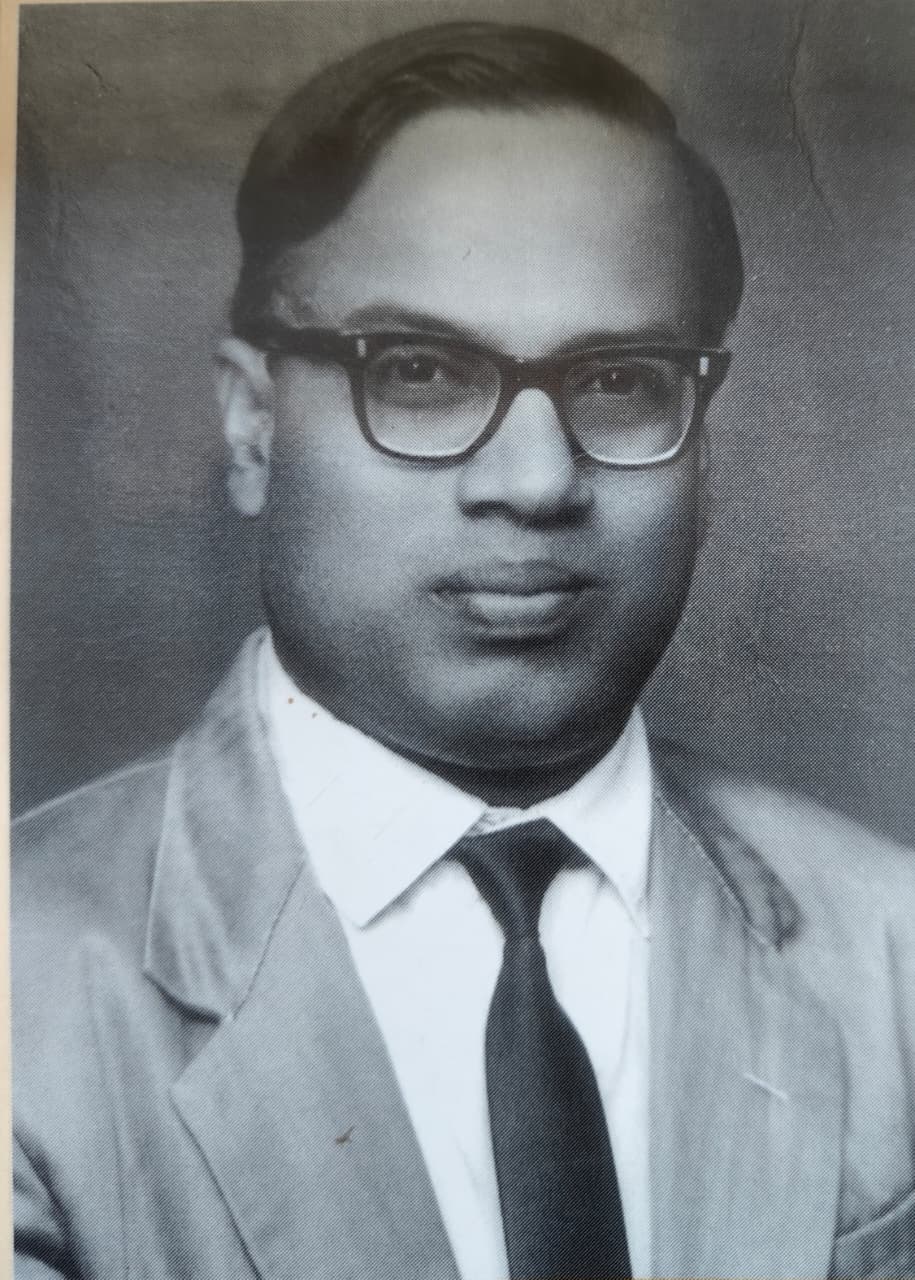
There is a Wikipedia page on Prof. M. Ilanchezhian now (3). He was born as the first child of Manikkavasagam and Abirami Ammal in Perunagar near Kanchipuram on 21 October 1925. Father Manikkavasgam was very concerned about the disparity in society we had during his time. Besides, the status of Tamil language in the then Madras state was rather poor. India has a group of people who managed to remain powerful and Tamil was mentioned as ‘narabasha’ (language for the people) and Sanskrit was mentioned as Devabasha. Besides, all classical music festivals would have songs in Telugu and Tamil was forbidden. Tamil is among the oldest language that is still widely spoken and has a rich literature starting from more than two millennia ago. In the middle of last century, Dhandapani Desikar sang in Tamil in Madras (Chennai now) and this upset the organizers. They decided to wash the stage with cow urine claiming the stage has been polluted (4). The popular magazine Kalki wrote an editorial justifying the action. This was strongly condemned by many in the state. After sensing the mood in the state, editor and popular novelist Kalki changed his stand. He had himself written beautiful songs in Tamil (kaatrinilae varum geetham comes to mind). This was sung by M. S. Subbulakshmi and the song was very popular (5). His novel Ponniyin Selvan was very popular as well and made into to a successful movie recently by Maniratnam. Nadars were not allowed to enter the Meenakshi Temple in Madurai and Mookka Nadar was lynched for defying the ban. I have written another blog on this (6). Times have indeed changed now. Recently, I visited Thiruchendur and found out that Shiv Nadar had donated for renovation of the Temple. I understand he donated funds for building the Kalaingar Karunanidhi Library in my hometome Madurai as well. However, during the first half of 20th century, the situation demanded a social reform movement. For most of the people birth determined what one could hope to do in life. Justice party was founded with the main objective of social justice. This led to the Dravidar Kazhagam (DK) and Periyar was invited to lead the organization. Manikka Vasagam was very active in Justice Party and then DK. He had changed his name to Manimozhiyar and was popularly known as Kanchi Manimozhiyar (7). He pushed Annadurai to start a political party and DMK was born. He was an MLA from Saidapet and stepped down to make Karunanidhi an MLA from Saidapet. Though he did not contest, he actively campaigned in the consituency. His son Kumarasamy was with him through all these and changed his name to Ilanchezhian.
Ilanchezhian attended Muthaialupettai High School and completed his SSLC (Secondary School Leaving Certificate), which was after completing 11 years of School. Tamil Nadu had 11+1 school and pre-university before starting college those days. This became 10+2 just after I completed my SSLC. He got BA(Hons) in Economics from Pachaiappa’s College, Madras. He joined Pachaiappa’s College in 1952 as a faculty in Economics. He became a Professor and Head of the Department and moved as Principal at Pachaiappa’s College in Kanchipuram. He also served as Principal at Kandasamy Naidu college before retiring in 1984. However, before he started his academic career, he was actively involved in Justice Party, DK and DMK. He worked as co-editor for the newspaper titled ‘Porwaal’ (War sword) with Manimozhiyar as the Editor. He wrote Editorials which were powerful. His Editorials were published as a book in 2009 (8). He authored a book titled ‘Thamizhan thodutha por’ (War waged by Tamils) telling the story of the anti-Hindi protest that controlled the state politics (9). The cover of the book is shown in the image below. The father-son duo were very active in the social reform movement of the Madras state. It is thanks to the work of many like them that all around development is seen today in Tamil Nadu.

I read a news recently about the Madhya Pradesh Government telling the Supreme Court in India that Caste was founded on Social Harmony (10). When I read a statement like this proposed by a Government or those holding power, I cannot but think how hollow they sound. Ambedkar did not believe Hinduism will solve the problems originating from the caste hierarchy and converted to Buddhism before he passed away. He wrote a book titled ‘Annihilation of Caste’ (11). I would be happy to read from the sections that were at the lower end of caste hierarchy declaring that ‘caste is a western conspiracy and we enjoyed the social harmony’. If these statements come from those who are on top, I see only a conflict of interest. They are justifying a system that allowed them to rule and prosper.
One of the decisions Justice party made was to introduce reservations. Today, it is difficult to miss memes that claim reserved category students got admission after securing zero marks in some parts of India. In 2012, I found out that the minimum marks required form admission to MBBS in Tamil Nadu was very similar across all categories. This was possible as the reservation helped all sections to grow. I wrote an Editorial in Current Science giving the data (12). I had written a blog on reservation in India and affirmative action in the USA earlier (13). I was just reading the autobiography of Katalin Kariko (14), winner of Nobel prize in physiology in 2023. Her father was a butcher and she grew up in postwar Hungary, a communist nation under the umbrelage of USSR. She mentions about school students names ending with F, indicating that their parents are physical labourers. Hungary thought children of labourarers should be educated and created opportunities to do it. Birth should not decide the future f any kid. Most everyone who has completed high school would have learned about the van der Waals equation (15). van der Waals was from a carpenter’s family and Netherlands decided to give education to all when he was young. He started school late and got his Ph. D. when he was 36. It had the equation named after him. Curt Witting was born in a place that was captured by different countries of Europe in his earlier years. His mother took him in a boat to Chicago where he grew up in a bad neighbourhood. Illinois decided to educate all children irrespective of their background. He became a successful experimental physical chemist having a great career at the University of Southern California (16).
Our caste and patriarchy all over the world may have given social harmony, when no one questions hierarchy. As they say, if you love someone, set them free. If they come back they are yours. If not, they were never yours. Using societal controls and planting a narrative of social harmony may bring stability. Not growth. To me this could certainly be one of the reasons for India not growing in the last millennia after having a great past. People like Ilanchezhiyan and Manimozhiyar fought for social justice and to a large extent they achieved it. It is a pity that many who benefitted from their thoughts and actions do not know them. Much worse, some of them are led to believe that they have been cheated by this movement and we should return to the glorious past. I do not know where Prof. Ilanchezhian would appear in the graph, near the origin or away in the diagonal. I am certain that his contributions have helped humanity. On his birth centenary, I remember him with gratitude.
References:
- https://www.britannica.com/topic/Ajivika I found this to be a good cite to learn some history. Accessed on 21 October 2025.
- A. R. Venkatachalapathy, Swadeshi Steam, Penguin Books (2023)
- https://en.wikipedia.org/wiki/M._Ilanchezhian Accessed on 21 October 2025.
- I found a historical article on this by a Japanese author and will add this here. Most today are not aware of this and they do not understand the reasons for the protest. This incident was also discussed in ‘Aettikku potti’ a feature in Kalki magazine.
- I love this song: https://www.youtube.com/watch?v=ikqFFjO_2cg
- https://earunan.org/2015/02/01/rosa-parks-and-mooka-nadar-recent-tales-from-the-worlds-oldest-and-largest-democracies/
- https://en.wikipedia.org/wiki/Kanchi_Manimozhiar accessed on 22 October 2025
- Thalayanga Ilakkiyam (Literary Editorials) Vasantha Publications, 2009 (Contains 30 of the impactful editorials published in Porwaal).
- Archive can be found here: https://archive.org/details/230225-193143/page/n25/mode/2up The book is still available.
- https://indianexpress.com/article/india/madhya-pradesh-govt-caste-system-founded-on-principles-of-social-harmony-10309526/ accessed on 21 October 2025.
- https://ccnmtl.columbia.edu/projects/mmt/ambedkar/web/readings/aoc_print_2004.pdf accessed on 21 October 2025.
- Editorial available online 0555.pdf accessed on 21 October 2025.
- https://earunan.org/2015/05/27/reservation-vs-merit-in-india-or-affirmative-action-vs-equal-opportunity-in-the-usa/
- https://www.penguin.co.uk/books/462526/breaking-through-by-kariko-katalin/9781529936391 accessed on 21 October 2025.
- https://en.wikipedia.org/wiki/Van_der_Waals_equation accessed on 22 October 2025
- https://curtwittig.com/ accessed on 21 October 2025.
 earunan