
Our Prime Minister has recently commented that India should abandon the education policies started by Macaulay during the British rule and produce more Sarvapalli Radhakrishnans. Of course, he has the luxary of addressing people (perhaps with a teleprompter) and never answering any questions. Radhakrishnan was born as Sarvapalli Radhakrishnayya to Sarvapalli Veeraswami and Seethamma, from a Telugu Brahmin family on 5 September 1888 in Tiruttani. Tiruttani is one of the six ‘padaiveedu’ (divine house) of Lord Murugan, who Tamils consider as their God and provider of the Tamil language. He had his early education at Voorhes College in Vellore. This was started by Mr. and Mrs. Ralph and Elizabeth Voorhees of the Reformed Church in America. He joined the Presidency College in Madras when he was 16 and got his Masters degree in 1907. The Wikipedia entry found [1] said he joined philosophy by chance rather than choice, which was not uncommon in his days, often dictated by affordability. His undergraduate Thesis was titled ‘The Ethics of the Vedanta and its Metaphysical Presuppositions’. The criticism of vedanta having no room for ethics was a motivation for his research. This perhaps explains our Prime Minister’s adulation. Radhakrishnan became the President of India and his birthday is celebrated as Teacher’s Day in India. Radhakrishnan grew to be one of the great philosophers in the last century.
Our Prime Minister would not like to recognize that he was in Congress which made him the President following the education he received from the missionary colleges. Osho, who became Bhagwan Rajneesh, was very critical of the choice for Teacher’s day and pointed out that it’s absurd to honor a teacher who has become President, i.e. a politician. [2] This started within a few months after Radhakrishnan becoming a President, which in my view is incorrect. India had just become a Democracy and our population was used to praising the King in his front and so it is not surprising. He served one term as President and may have liked to serve one more term but that was not to be. Radhakrishnan was a beneficiary of the education system started by Macaulay and learned enough to challenge the Christian missionary’s way of portraying Hindusim. William Meston and Alfred George Hogg, advisors of Radhakrishnan commended his Thesis. In turn, Radhakrishnan commended Prof. Hogg as his distinughuished teacher and one of the greatest Christian thinkers we had in India. Our Prime Minsiter and all those criticising Macaulay Education may do well to ask “how did we let Macaulay come here and write our Education policy?” I remember a meme spreading lies about Macaulay being circulated distorting his words. Some blame Moghuls and British for the conditions we were in when Macaulay came (I do not agree with this). In the large scheme of things, his arrival and education policy did help the people of India. Where is India without it’s people?
I wrote this blog on 24 December, the remembrance day for Periyar and MGR, two of the most popular leaders in Tamilnadu in the 20th century. MGR broke away from Karuanidhi’s DMK, started by Annadurai, and started ADMK which became AIADMK (All India Anna Dravida Munnetra Kazhagam), a few years later. Many in India are surprised by the Dravidian movement which has been ruling Tamilnadu since 1967. Some equate it with communism without having any understanding. DMK is as capitalistic as BJP is. Rajaji supported Annadurai when DMK was elected the first time in 1967, more on this later in this blog.
Why has Tamilnadu voted for the Dravidian parties since 1967? To understand this, we need to know Agathiyar. Recently, R. Balakrishnan, a retired IAS officer spoke about the myth of Agathiyar (Agastya) in Tamil. [3] Tamil is among the oldest language still widely spoken. Tholkappiyam, a grammar treatise on Tamil was written more than 2000 years ago. A myth was created by some that Agathiyar was sent from Himalayas during a wedding ceremony of Lord Shiva as the whole population attended the wedding [4]. Earth (which was only the Indian subcontinent in this myth), unable to bear the weight of all devotees, tilted with North going down and South going up. To bring balance, Agathiyar, a dwarf saint, was sent to South by Lord Shiva. Agathiyar saw Deccan to have grown too tall, higher than Himalayas and stepped on it and reduced its height. He thought Deccan had become too arrogant with undue height and had to be taught a lesson.
He brought some water enroute, kaveri river given by Shiva in a small vessel (kamandalam). While he was on a meditation on Deccan (near what is Thalakaveri, origin of Kaveri river), Lord Ganesha comes as a crow and tilts the vessel and Kaveri starts flowing. When Agathiyar reached South, earth regained the balance and was standing flat (perhaps on the nose of a tortoise which stood all the way down, to borrow the words of Narlikar, one of the posthumous Bharathratna awardees). Agathiyar taught the tribes living in south Tamil which was given to him by Shiva. Shiva apparently gave Tamil to Agastya in Banaras as some others were arrogant and speaking in Sanskrit and not respecting Agastya. According to this myth, he wrote the first grammar book in Tamil which no one has ever seen. He is claimed to be the guru of Tholkappiyar whose Tholkappiyam is available now. Their brilliance in creating a myth to control a population is increcible.
Linguistic scholars know the origin of Tamil and Sanskrit. For people who want to know some history, there are many books and I recommend ‘Tamil a biography’ written by David Shulman. [5] Those who want to believe Sanskrit or Tamil is the oldest and better than the other langauge(s) may continue to believe so and not read this book or learn any history. I was in Agartala recently and went to a Shiva temple there. I saw the statue of Shiva, Parvati and Ganesha. Perhpas, Murugan is not in their mythology. Murugan, the God Tamils worshipped was accommodated as the second son of Shiva in South and became known as Karthik in some parts of India. Clearly, whether Tamil came from Shiva or Murugan, it does not matter anymore. It can be appropriated and given a date after Sanskrit, which I suspect is the reason for creating such myths!
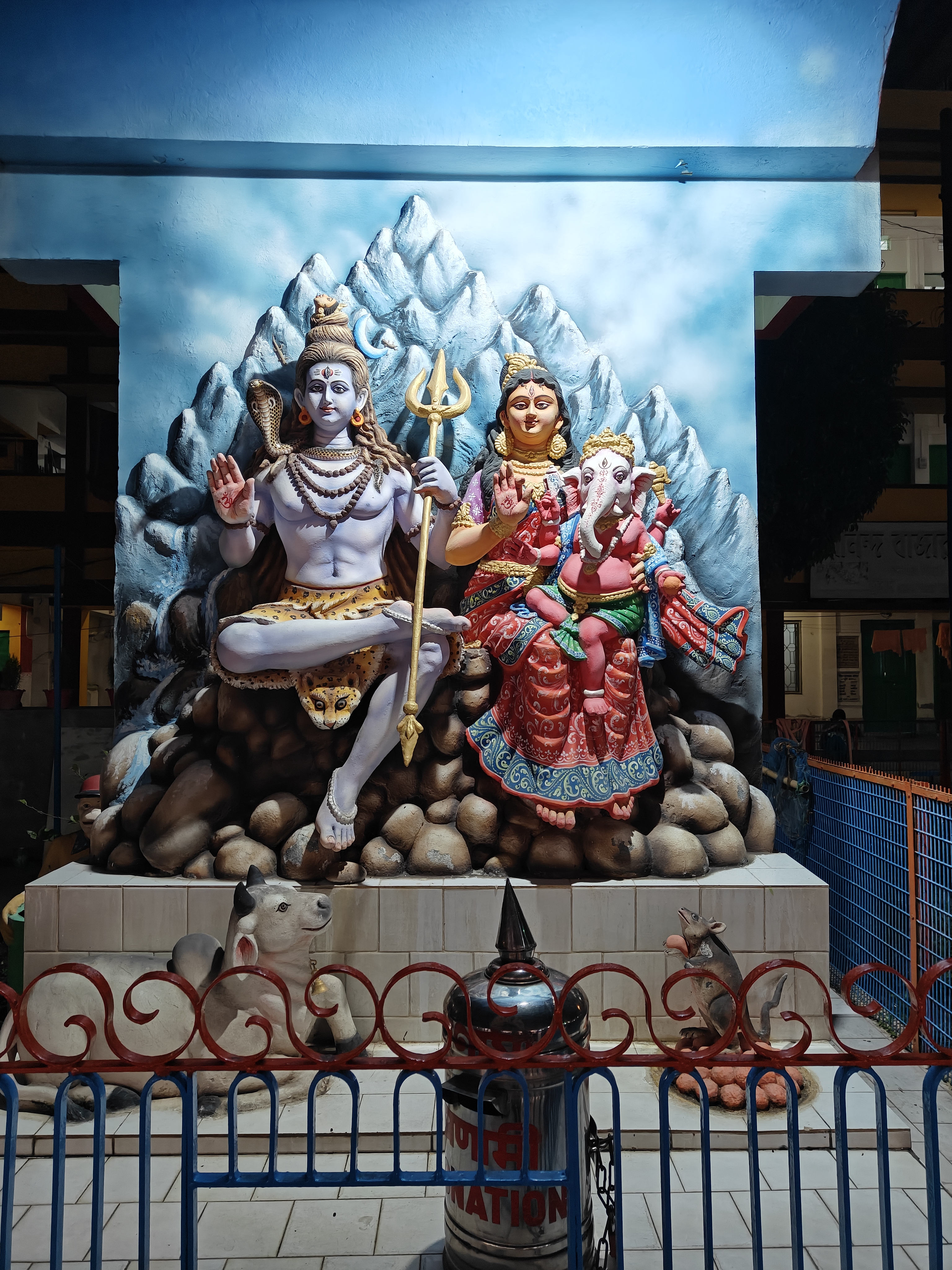
If I look at Agathiyar and Macaulay, the later seems to be an honest real human being who came to India with people stuck on past glory and introduced education for all. Certainly East India Companty did not come to India with the mission to teach and emancipate the locals. They came to make profits. The UK did not start ruling India to uplift the population here but to loot its wealth for its own benefit. Bengal famine was man (Churchill) made and Sashi Tharoor can talk eloquently about this. He may not like to talk about how uppercastes in Kerala used religion and their association with kings to exploit the people. The UK/Europe, likewise, would not like to characterize Churchill as a mass murderer but would characterize Hitler as one. Coming back to Macaulay, Radhakrishnan ‘s advisors from UK, after teaching him research methodology, appreciated his work and gave him the degree. They did not try to shut him down for showing that the view of Christianity about Hinduism was wrong. They were open minded scholars willing to learn from a student. However, those who created the myth of Agastya, would like the myth to continue and they are not open minded to look at any evidence.
Tamil had been in use all over India in the past. Brahui language spoken in northwest Pakistan/Afghanistan is closely related to Tamil and other Dravidian languages. Apparently, Brahui also means ‘God’s language’. Gandhi gave them a way to appropriate Brahui by saying “Ishwar Allah Tere Naam’. However, their reason for existence is to exclude Islam and hence, Urdu a language really developed in India may be considered foreign soon. Those days, everywhere, God was there for explaining things people could not understand. I suppose, this will continue as long as humans manage to keep earth inhabitable for them and survive. As a proverb in Tamil says, what we could learn is only a handful and we could never learn, is like the whole world (கற்றது கைமண் அளவு கல்லாதது உலகளவு).
People speaking Tamil have eventually settled in what is the state of Tamilnadu today in India. Of course, some Tamils have migrated to Sri Lanka, Singapore, and Malaysia [6] where Tamil is one of the official languages. Agathiyar is a mythological individual who was invented to appropriate the people and their language by people who wanted to claim Sanskrit as the mother of all languages. This is the worst anyone can do to someone else. While Prime Minister is condemning the Macaulay education, his party and Governor are trying to propogate the myth today. TN Governor Ravi and his party/group associates are not trying to honour one of the oldest language but trying to appropriate it without ever contributing to it. Tamil scholars have slammed their attempt to recreate the ‘Agashtya expedition’ based on a myth to appropriate what is not their own. [7] According to the report in the Federal website, the organizers of Kasi Tamil Sangam from IIT Madras did not respond to the critique’s comments. Unlike the advisors of Radhakrishnan from UK, the organizers from IIT Madras did not want to listen and discuss but participated in propagating the myth. They are using the IIT Madras created by Nehru who wanted scientific temper to be in the Constitution, to do exactly the opposite. Thinking about it, this is not different from the myth of Agathiyar who was invented to keep the people in dark.
Periyar came from a rich family and joined congress and worked with Rajaji, who was then a tall leader from the Madras presidency. During a visit to Kasi, Periyar was discriminated by the local Brahmins which changed him. In Tamilnadu as well, he did not like Congress party conferences serving food for Brahmins separately. I joined the Indian Institute of Science in 1997 and have written early about its beginning. [8] In this huge campus of about 370 acres, no restaurants were allowed to serve non-vegetarian food. Student hostels had separate vegetarian and non-vegetarian messes and one which served both. In the annual lunch arranged for all faculty and family, non-vegetarian food was not allowed. When I became the Secretary in the Faculty club organizing the annual lunch, I arranged non-vegetarian food for those who prefer that. Not surprisingly, that was a significant majority. While those promoting such myth get annoyed with the ‘minority appeasement’, they promote majority harassment by imposing the minority preferences in public places.
I was in a committee to bring a restaurant in the campus. The committee decided the menu and fixed prices for every item, including vegetarian and non-vegetarian dishes. When the restaurant opened, only vegetarian items were served. When I inquired with the management, they informed me that some influential people had asked them not to offer non-vegetarian dishes. After complaints from me and others, they started serving non-vegetarian dishes outside the restaurant in an open area. One day, I saw a students group wanting to sit together and the hotel management not allowing them as some of them wanted non-vegetarian and others vegetarians. They wanted to sit together and eat. I complained to the Director that IISc was practicing segregation and the restaurant started serving all items inside. This happened during 2005-2010. I can imagine how it was during Periyar’s time. Most of these staunch vegetarians did not miss a chance to go abroad for their studies, conferences or vacation and rub shoulders with Europeans, Americans, Japanese or Chinese whose primary food is meat, dominated by beef. However, they wanted the public space in India to remain vegetarian. No-one can object to how anyone lived in their home or their food preferences. While using public space, forcing a majority to follow your way of life is unacceptable. Recently, Karnataka CM was accused of having non-vegetarian when some of them were celebrating some festival. This must end. Periyar’s fight was not just about food.
Rajaji as Chief Minister of Tamilnadu did a few things that costed his position twice. During his term as CM before independence, he enforced Hindi and lost his seat. He asked Tamils to speak Hindi on the street and Tamil at home. I have written two other blogs on this issue [9,10] for those who are interested to learn more. Two things he did as CM in 1950s was to close down a large number of Government schools and introduce vacational training (kula kalvi) for students to learn their family skills, carpentry, goldsmith, … Periyar opposed both strongly and encouraged Kamaraj to take on Rajaji within Congress. Rajaji was forced to resign and his candidate for CM was defeated by Kamaraj who became the CM. Periyar asked Kamaraj to fight in Gudiyatham, far from his home, to become a Congress MLA. Annadurai did not field any candidate from DMK. Kamaraj won the election against a communist candidate.
On becoming CM, he re-opened all the schools closed by Rajaji. He stopped ‘kula kalvi’ plan of Rajaji. Kamaraj is called a ‘Leader who opened the eyes of the people through education’ (கல்விக் கண் திறந்த தலைவர்) in Tamilnadu. He is considered by some historians as the first Dravidian CM in Tamilnadu. Later, as Congress CM, when he was trying to impose Hindi, Annadurai led DMK to defeat him. In 1967, when Annadurai won and formed the first DMK Government, Rajaji was supporting him. Let me repeat: Periyar and Annadurai supported Kamaraj to become Congress CM against the policies to deny education for all. Rajaji supported Annadurai to defeat Kamaraj as he did not like some of the policies of Congress at that time. Annadurai as CM, changed the name of the state to Tamil Nadu and led Tamilnadu for two years before passing away in 1969. Like some feel about Patel who passed away within a few years after Independence, I wish Annadurai lived a few more years. Today, in Tamilnadu, one group claims Bharathiyar mentioned Tamilnadu before Annadurai. This is tried after the attempt by TN Governor Ravi to suggest the name of the state to be Tamilagam received a lukewarm response. One of the legislations Annadurai brought was to legalize marriages that were conducted without any rituals sanctified by a religious leader. As I have mentioned in another blog, my marriage was conducted this way.
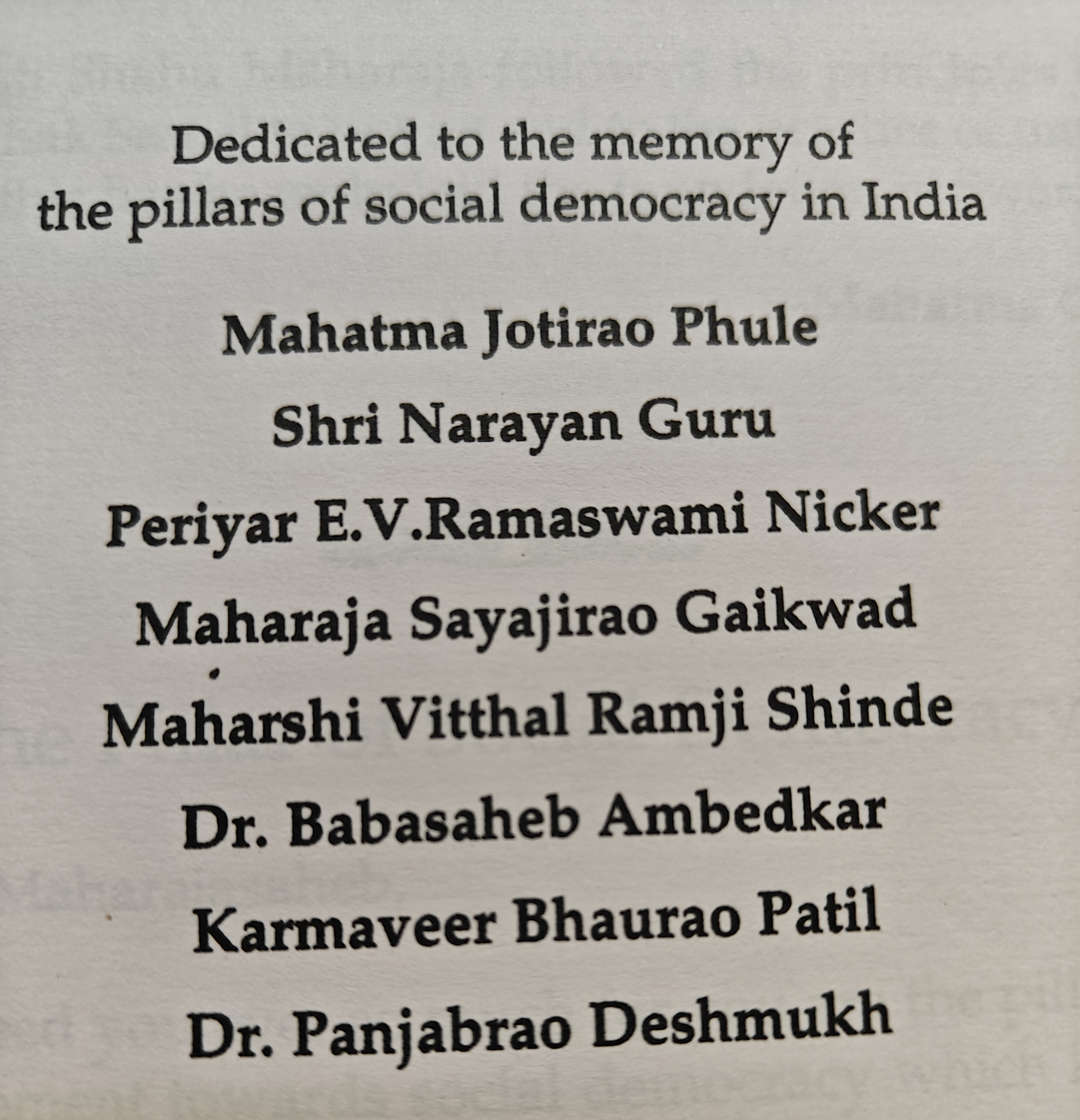
During the first half of twentieth century several social reformers were fighting against caste based discrimination of fellow humans in Hinduism. Different leaders chose different paths. Ambedkar converted to Buddhism. Narayana Guru did not convert but reformed Hinduism in Kerala and ensured that upper castes do not exploit lower castes. Ramalinga Vallalar denounced all rituals and promoted worshipping only light without any form. He wore only white clothes. Gandhi preached against untouchability and wanted the temples to be opened for all castes. He had a lot of discussion with Periyar and Ambedkar about social reforms. Shahu Maharaj in Kohlapur started schools for everyone including women. When I visited Shivaji University Kohlapur, I was gifted a biography of Shahu Maharaj which was dedicated to some of the reformers including Periyar, image shown below. [11] Periyar chose atheism as he was convinced that much of the population was controlled by religion to keep them in dark. For those who follow Tamil, I would encourage you to listen to the speech in the video of Reference 4 below. For others, I have given the gist above. Periyar and Rajaji remained friends for life and they both lived to mid 90s.
Bharathiyar’s poems are being discussed in Tamilnadu today with every group making different claims. Bharathiyar is one of my favourite poet. I have mentioned often that he deserved the Nobel in literature except that he wrote mostly in Tamil and in his time, no one could promote him. He passed away when he was only 39 and had written from his childhood until his death. I have read his translation of Bhagavad Gita in Tamil with a long Introduction written by him. He was a staunch devotee of Krishna and wrote many poems on Krishna. He was a liberal at heart and wrote about women’s liberation and abolition of caste as well. He evolved and naturally his views evolved. For those who can follow Tamil, I recommend Sugi Sivam’s speech on this issue [12]. Towards his last years Bharathiyaar wrote “கடலினைத் தாவும் குரங்கும், வெங் கனலிற் பிறந்ததோர் செவ்விதழ்ப் பெண்ணும், வடமலை தாழ்ந்தத னாலே தெற்கில் வந்து சமன்செயும் குட்டை முனியும், நதியி னுள்ளேமுழு கிப்போய் அந்த நாகர் உலகிலோர் பாம்பின் மகளை விதியுற வேமணம் செய்த திறல் வீமனும் கற்பனை என்பது கண்டோம்”. In English “We now understand that the monkey flying over an ocean (hanuman), a beautiful woman born in a fire, the dwarf saint coming from Himalayas to balance the earth (agastya), and Bima who went under water to the Naga world to marry a snake’s daughter are all fictions’. Today, as every political party in Tamilnadu tries to own him and ask their friends to condemn him, the fact is Bharathidasan, who changed his original name of Subburathinam was active in Dravidian politics. Kalki (author of the popular novel Ponniyin Selvan and Congress supporter in those days) started promoting Bharathiyar only after his death and did not appreciate Bharathiyar’s progressive writing.
To conclude, I find those who created a myth of Agathiyar to appropriate Tamil to be more evil than Macaulay who came here and drafted an Educational policy to take education to all. The Union Government introduced the Viswakarma Program recently, which made Rajaji lose his CM position in TN. At the same time, the Government introduced a plan to take students from Gurukul (studying Vedas?) to IIT (13). On the one hand, they claim Vedas have everything that we can ever know. On the other hand, they sneak through a plan to admit students from Gurukul to IIT. If this is not an admission that Vedas do not have everything and in today’s India IIT education promises a good life, what else can be? If one were to think logically, Government should have given a plan to admit students who may qualify for Viswakarma program to IIT and help them update their skills at the Indian Institutes of Technologies. They have introduced a plan to stop the education of people who work with their hands. They introduce special plans to give IIT Education to students who go to Gurukul! Tamilnadu Government rejected the Viswakarma program and introduced another bill to support people who are above 30. Union Government introduced the bill to support youth just after their highschool. I wish a middle ground is found.
No wonder, most people in Tamilnadu today remember the important contributions of Bharathiyar, Periyar, Kamarjar and Annadurai as education for all became a motto in the state. This was continued by every CM after them from Karunanidhi, MGR, Jeyalalitha and now Stalin. The results are clear for those who want to see. Empowering the population can be the only goal for any Government. If a Government tries to promote a myth as knowledge to keep the people in dark, I would be doubtful of their intentions. Home minister wants to remove English and introduce Hindi which neither has great literature as Tamil or Sanskrit nor modern knowledge as English. Is this yet another way of keeping people in the dark? Mohan Bhagawat says he would not care about the Constitution and India is a Hindu Nation. Modi says he and Gawai rose to their positions thanks to the Constitution. I would like our Constitution to guide our growth.
References:
- https://en.wikipedia.org/wiki/Sarvepalli_Radhakrishnan Found on 24 December 2025.
- https://www.osho.com/osho-online-library/osho-talks/celebration-completion-radhakrishnan-a643cc1a-4ad?p=79716b3b872b30cfa6ab1cf65246c88a Found on 24 December 2025
- https://www.youtube.com/watch?v=UlWlMJZwfhA Agashtyar: A relook. Speech in Tamil.
- https://youtu.be/EUhLto9aQLc?si=cR4zYuoHVR0HXON7 Listened on 24 December 2025
- David Shulman, Tamil a biography 2016 https://www.goodreads.com/book/show/29940795-tamil
- Somewhat coincidentally (helped by Google and AI?) an audio-recording of a speech in Tamil by M R Radha in Malaysia was recommended by YouTube. I would recommend this for anyone interested in learning how Tamilnadu and Malaysia were in those days. https://youtu.be/LdgXUgrZaBw?si=aKEJbglkoc9e_cVw
- https://thefederal.com/category/states/south/tamil-nadu/tamil-scholar-tenkasi-to-kashi-agasthya-expedition-217197 (Found on 24 December 2025).
- https://earunan.org/2018/05/27/j-n-tata-planned-the-indian-institute-of-science-and-swami-vivekananda-did-not-influence-it/
- https://earunan.org/2025/10/21/birth-centenary-of-m-ilanchezhiyan-social-activist-writer-and-an-excellent-academic/
- https://earunan.org/2019/09/14/languages-in-india-some-experiences-and-a-suggestion/
- Jaysingrao Pawar, “Rajarshi Shahu Chhatrapati: A social revolutionary”, Maharashtra Ithihas Probodhini, Kohlapur. 2013.
- திருப்பரங்குன்றம் யாருக்கு சொந்தம் | Suki Sivam Speech | Thiruparankundram – YouTube Accessed on 24 December 2025.
- https://timesofindia.indiatimes.com/india/government-throws-open-iits-for-students-from-gurukuls/articleshow/122961118.cms#:~:text=India’s%20education%20policy%20is%20undergoing,modern%20scientific%20and%20academic%20inquiry. (Accessed on 25 December 2025)

 earunan